

The Long Brief: Holiday From History [Part 3]
Great powers didn’t retire. They modernized—and they learned our gaps.

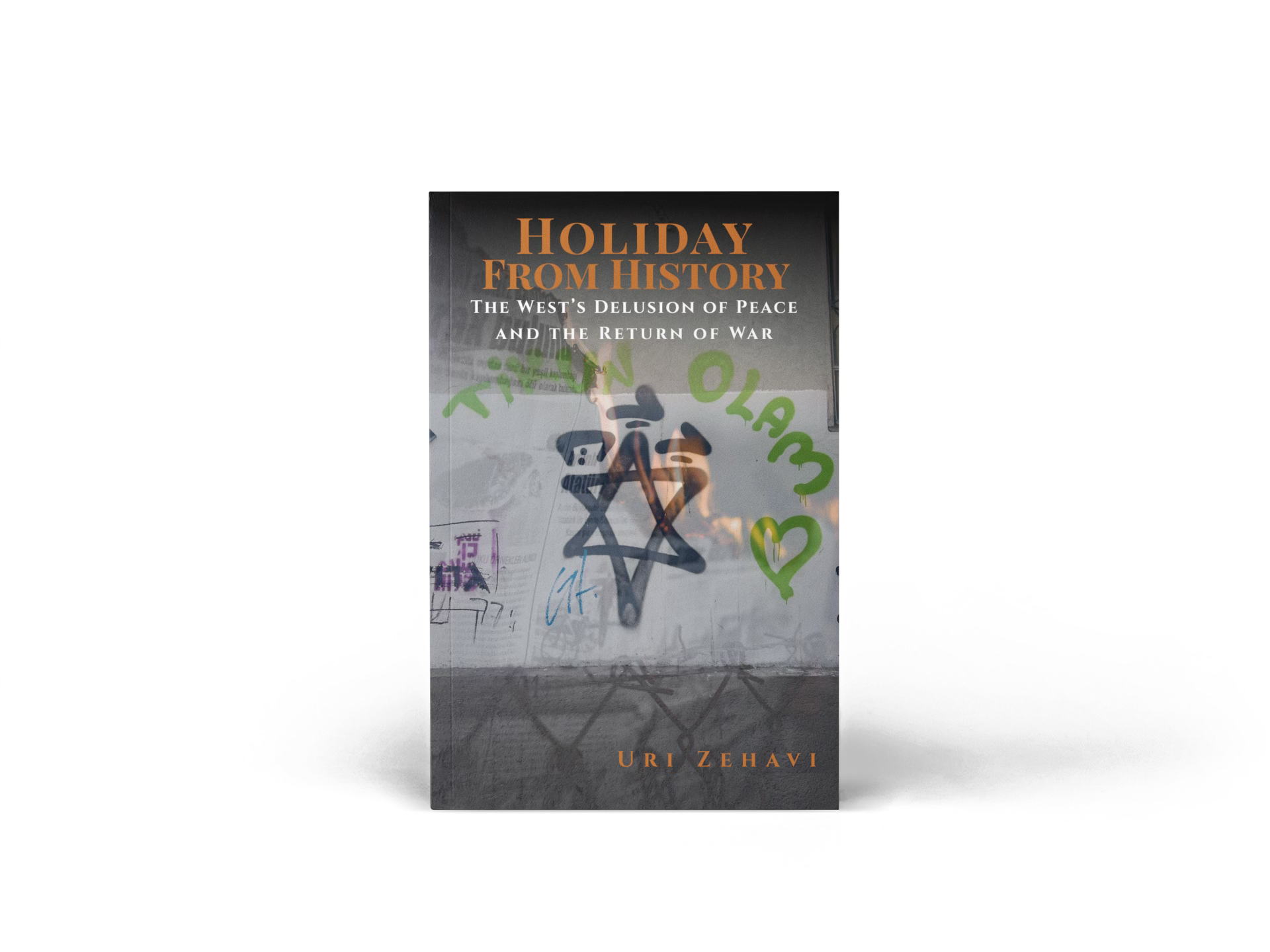
February Long Briefs continue our four-part serialization of Holiday From History. This week covers the great-power chapter of the story—then pivots into the first two “new weapons” shaping the battlefield now.
Full book: Holiday From History on Amazon
Shalom, friends.
This installment is about capability, will, and method: how revisionist powers test borders, how nuclear extortion becomes a regime survival strategy, and how the U.S. signal has drifted from clarity to churn.
Then the lens tightens: terror is not random violence—it’s staged pressure—and demography is not a statistic—it’s leverage.
Holiday From History:
The West’s Delusion of Peace and the Return of War
Part Three: Great Powers Unmasked
Chapter 12: Russia’s Return
The West imagined a “normal” post-imperial Russia in the 1990s and booked a peace dividend on that premise. It was a pleasant delusion. From Chechnya to Crimea, cyberattacks to gas blackmail, Moscow behaved like what it is: a wounded empire biding time. Ukraine ripped off the facade.
The red flag came down in 1991; the center–periphery logic stayed. Tsarist and Soviet habits—rule from the core over diverse borderlands—didn’t evaporate with a change of colors. National questions were frozen, not solved. As the West toasted an “end of history,” Russia grappled with imperial aftershocks—often with artillery.
In 1991 Chechens declared independence. Yeltsin answered with tanks in 1994. Grozny was turned into kindling; tens of thousands died. Russia withdrew in humiliation in 1996—briefly. In 1999, amid apartment bombings and a militant incursion into Dagestan, Vladimir Putin returned to war. His promise to “wipe out terrorists in the outhouse” translated into massed firepower and a flattened capital. “Chechenization” installed the Kadyrov clan to terrorize on Moscow’s behalf. The message was unmistakable: no piece of the federation would leave. Call it counterterrorism if you like. It was imperial reconquest.
Beyond formal borders, the toolkit matured. In the 1990s Moscow helped carve out Transnistria in Moldova, Abkhazia and South Ossetia in Georgia—then parked “peacekeepers” who never left. When Georgia turned West under Saakashvili, Russia tested its doctrine. In August 2008, after skirmishes in South Ossetia, Russian armor smashed across the border, bombed near Tbilisi, and pushed to Gori. Thousands of Georgians fled. Moscow then “recognized” Abkhazia and South Ossetia, installed bases, and paid in rubles. It was the first post-1991 overt border change by force in the former USSR. Western response: statements and a pause in NATO outreach. The Kremlin learned that revanchism, carefully dosed, carried a low price—especially outside NATO’s walls.
In 2015 Russia projected power beyond its near abroad for the first time since Afghanistan. Under the banner of fighting ISIS, it built Khmeimim airbase, expanded Tartus, and bombed Assad’s rebels—including Western-backed factions. It saved a client, gained a Med foothold, blooded its forces, and showcased new kit. The cost to Syrians was obscene: hospitals, markets, and apartment blocks hit as a matter of method; Aleppo starved and shelled into submission. The global headline was different: Russia was “back,” acting decisively while Washington hesitated. A regional balance shifted because Moscow moved and the West blinked.
Thread these together and see what the obvious. Chechnya reconquered a province. Georgia amputated a neighbor. Syria reasserted great-power reach. The justifications—counterterrorism, protecting “citizens,” stopping “genocide”—were pretexts. The motive was consistent: preserve a sphere, punish apostasy, gain leverage. The West compartmentalized each as a local issue. The Kremlin saw them as steps in one campaign.
Russia’s neo-imperial drive isn’t only about tanks and pipelines. It’s a story Moscow tells itself—about a civilization, a church, and a mission. Two ideas matter most: Russkiy mir (the “Russian World”) and Moscow as the “Third Rome.” Together they turn expansion into destiny.
Russkiy mir—the Russian World. After 1991, some 25 million ethnic Russians woke up outside Russia. The Kremlin decided they were still its responsibility. In 1999, a “compatriots abroad” law declared a duty to protect Russian speakers and former Soviet citizens wherever they lived. In 2007, the Russkiy Mir Foundation launched to fund language centers, schools, and networks from Riga to Almaty. On the surface, this looked like soft power. Subtext: build a constituency that sees Moscow as patron and arbiter.
By the 2010s, Russkiy mir hardened into a claim: wherever Russian language and Orthodoxy reach, Russia has a special right to “protect.” That is why “compatriots” in Estonia, Crimea, or Donbas are framed not as citizens of those states but as members of a civilizational community under Moscow’s care. The term rossiyskiy (civic, multiethnic) serves at home; russkiy (ethno-cultural) serves abroad. The regime toggles between them as needed—one nation for minorities inside, an ethnic crusade outside.
The religious counterpart completes the picture. Since the 16th century, Russian clerics have preached: “Two Romes have fallen; the third stands; there will be no fourth.” Moscow, heir to Byzantium, is the last bastion of true Orthodoxy—charged to protect the faith and the peoples of Holy Rus. Patriarch Kirill has revived this openly, in lockstep with the state. Church and Kremlin trade favors: power and money for pulpits and legitimacy. The myth turns Kyiv from a neighbor into a cradle; Crimea from a peninsula into a baptismal font. If Kyiv is the mother of Rus and Chersonesus the site of Prince Vladimir’s baptism, then “reunifying” these places reads as redemption, not conquest.
The most effective tool this ideology has used has been passportization. Moscow mass-issued Russian passports in Abkhazia and South Ossetia in the 2000s, then claimed a duty to defend its “citizens” in 2008. It did the same in Donbas after 2014, accelerating in 2019 by decree; by 2022 hundreds of thousands had Russian papers. Crimea’s residents were handed passports wholesale. Diaspora policy, funded through ministries and church networks, stitched an extraterritorial Russian constituency across the post-Soviet space. Media and schools did the rest.
At home, state television and the security services weave a continuous story: baptism at Kyiv, empire, the Great Patriotic War, and today’s struggle against a decadent West and its “color revolutions.” Patriarch Kirill blesses the war as moral resistance—at one point even casting it as a stand against “gay parades.” The fusion is seamless: Orthodoxy becomes raison d’état; patriotism becomes liturgy.
Through this lens, Crimea in 2014 was not theft; it was the “gathering of Russian lands.” Donbas was not subversion; it was protection of compatriots. The 2022 invasion was pitched as the reunification of Holy Rus and defense of Orthodoxy against a NATO-run “Nazi” regime. To Western ears, this sounds deranged. To audiences primed by grievance and catechism, it sounds like duty.
Strip the vestments and you see imperialism. Leave them on and you see a mission. That’s the point. The Kremlin’s ideology turns neighbors into wards and conquest into sacrament—so that when Moscow redraws borders, it does so with a crucifix in one hand and a passport in the other.
All these threads—imperial grievance, coercive precedent, civilizational zeal—cross in Ukraine. Here the Kremlin’s project is existential. What began as a masked intervention in 2014 exploded in 2022 into the largest European war since 1945. The arc from Crimea to full-scale invasion is the story of Russia’s ambition and the West’s belated wake-up.
When Yanukovych ditched an EU pact under Kremlin pressure, Ukrainians filled Kyiv’s Maidan demanding a European future. Police gunfire turned protest into revolution. After more than a hundred were killed, Yanukovych fled. Moscow called it a Western coup and moved. Unmarked Russian troops seized Crimea’s levers of power, staged a sham referendum at gunpoint, and annexed the peninsula. Putin wrapped the theft in myth—Crimea as “the spiritual source of the Russian nation.” The West sanctioned, protested, and stopped. Crimea stayed stolen.
Even as the world stared at the map, Russia lit Donbas. Masked gunmen led by Russian operatives seized buildings in Donetsk, Luhansk, Slovyansk. “People’s republics” were proclaimed. Unlike Crimea, the state in the east fought back. An undeclared war followed. When Kyiv’s forces threatened to roll the fronts, regular Russian units crossed the border. The downing of MH17 with a Russian Buk killed 298 innocents and briefly pierced complacency. Sanctions tightened. The war froze under Minsk I and II. A line of contact cut Donbas. Moscow held a slice of Ukraine and a lever on Kyiv. Many in the West treated it as a containable nuisance. Putin treated it as phase one.
In late 2021 Russia massed forces around Ukraine and issued impossible demands: NATO retreat, a veto over Ukraine’s future. On 24 February, Putin announced a “special military operation” to “demilitarize and denazify” a democratic neighbor. Missiles hit at dawn. Columns drove from Belarus toward Kyiv, from Kharkiv’s border, from Crimea toward Kherson and Mariupol. The plan was a decapitation strike. Seize the capital. Install a puppet. End Ukraine in days.
It failed. Zelenskyy stayed. “I need ammunition, not a ride.” Territorial defense units and regulars ambushed convoys, wrecked armor, and held the approaches. Airborne troops were beaten back at Hostomel. Around Kharkiv, Russian battalions stalled and bled. By early April, the invaders retreated from northern Ukraine. In Bucha, the withdrawal exposed mass murder. Putin scaled down his rhetoric. The “liberation of Donbas” became the new line.
Mariupol fell in May 2022 after a savage siege. The Azovstal last stand tied down brigades while the city was pulverized. Russia gained a land bridge to Crimea and a symbol. In the summer, Russia pounded Severodonetsk and Lysychansk to rubble and took Luhansk province yard by yard. Then momentum flipped. In September, Ukraine struck thin Russian lines in Kharkiv oblast. Izium fell. Thousands of square kilometers were liberated in days. In November, Kherson—the only regional capital Russia captured—was retaken after Ukraine methodically cut bridges and depots. A place Putin had annexed on paper weeks earlier cheered Ukrainian troops in the streets.
The front hardened into attrition. Bakhmut became a meat grinder where Wagner’s convicts died by the thousands for a shattered town. Ukraine hit deep: the Moskva sank; depots blew up; drone boats slashed at Sevastopol; rails and HQs burned. In 2023 Ukrainian forces pushed on layered defenses in Zaporizhzhia, breaching lines around Robotyne, while Russia hurled armor at Avdiivka and lost it by the battalion. Drones and electronic warfare defined the air; artillery defined the ground.
The West responded harder than in 2014: bank sanctions, reserve freezes, export controls, corporate exits, oil embargoes, and a torrent of weapons for Kyiv. Europe raced off Russian gas. NATO rearmed in a hurry. Finland joined; Sweden moved. Germany finally moved money and kit. Still, Russia did not collapse. It rerouted oil to Asia, patched chip shortages through intermediaries, mobilized industry, and pulled tanks out of storage. Iran supplied drones. North Korea sent shells. China hedged and traded. The ruble wobbled and steadied. The economy shrank and adapted. Putin doubled down, betting that propaganda and repression at home plus time abroad could outlast democracies’ patience.
Ukraine fought on as a nation under arms. Its economy crashed and survived on aid. Its people—millions displaced, millions abroad—kept supporting the fight. Ukrainian industry improvised. Western kit—155s, HIMARS, air defenses, tanks—arrived and mattered. So did small drones, sappers, and NCOs. Ukraine learned fast. It had to.
This war obliterated the illusion that Europe had “moved past” history. It is industrial war with trenches, massed fires, and cities erased. It exposed how shallow Western stockpiles were and how soft our assumptions had become. It also stripped Russia of its “normal partner” mask. The empire never accepted the loss of its borderlands. Given the chance, it chose bombardment over coexistence.
Moscow did not lean on tanks alone. It learned to fight in the gray zone and to win while pretending not to fight at all. Energy, cyber, covert violence, disinformation, mercenaries, proxies. Each tool exploits Western openness and the gaps in our laws. For years we treated them as nuisances or crime. They are policy.
Gazprom was never just a gas company. When Europe bought a third of its gas from Russia, the Kremlin bought leverage. In 2006 and 2009, Moscow cut winter flows through Ukraine and let Italy and the Balkans shiver. Nord Stream to Germany bypassed “unruly” transit states and deepened Berlin’s dependence. Cheap gas in peacetime became a choke chain in crisis. In 2022, the valve turned and Europe scrambled. Prices spiked. Inflation roared. The pipelines that were supposed to anchor peace turned out to be siege engines.
Russian services use keyboards like artillery. NotPetya in 2017 started in Ukraine and knocked out systems worldwide, costing billions. In 2015 and 2016, linked hackers switched off parts of Ukraine’s grid. Western utilities then found Russian code probing their own networks. Space systems were hit at the outset of the 2022 invasion. Off the screen, bombs turned up at munitions depots in the Czech Republic and Bulgaria. Undersea cables and pipelines became objects of quiet dread. Gray-zone attacks let Moscow hurt adversaries while keeping a layer of deniability—though they aren’t afraid to get their hands dirty.
Enemies of the regime are not safe in London, Berlin, or Kyiv. Litvinenko died from polonium in his tea. Skripal survived Novichok on his doorknob, while an innocent Briton did not. A Chechen exile was shot in a Berlin park at noon. Inside Russia’s near abroad, journalists, defectors, and Ukrainian officials have been gunned down or blown up. The signature is deliberate. It intimidates and advertises reach. The Kremlin does not conceal its message: we can touch you anywhere.
They operate further in the cyber shadows as well, troll farms masquerade as locals, pick at every scab, and flood the zone with lies. In 2016, Russian hackers stole and leaked emails in the United States while the Internet Research Agency amplified division and boosted a candidate Moscow preferred. In France, Macron’s campaign got hit. In Britain, Kremlin outlets and bots cheered Brexit talking points. Far-right and far-left parties took loans or favors. The point is not persuasion. It is corrosion. If citizens cannot agree on basic facts, they cannot act together. That is victory enough.
Though, they’re not afraid to have shadowy operatives in the real world doing their bidding. Wagner, until its owner flamed out, was Russia’s expeditionary arm in denial-friendly form. It fought in Donbas, bled in Syria, traded guns for gold in Africa, and terrorized where useful. If atrocities surfaced, Moscow shrugged. “Volunteers,” it would say. In Moldova’s Transnistria, in Georgia’s Abkhazia and South Ossetia, in Ukraine’s Donbas, local “people’s republics” carry Russian badges under local flags. Proxies extend reach, buffer risk, and blur responsibility.
Put the pieces together. Energy weaponized trade. Cyber turned infrastructure into targets. Assassins turned allies’ streets into crime scenes. Disinformation hollowed out trust. Mercenaries and proxies turned wars into fog. Everything stayed just under the threshold that would force NATO to act as one.
In 2022 the mask slipped, but the hybrid war did not stop. As tanks rolled, cyber teams hit Kyiv’s networks. Trolls tried to panic civilians. Shelling in Donbas manufactured pretexts. The gray and the kinetic moved together.
This is the sober lesson. While the West took a holiday, Moscow drilled in the gaps. It treated markets, media, laws, and pipelines as battlefields. We treated them as neutral ground. That asymmetry was the point.
The West spent three decades treating Russia as a problem partner who would, in time, settle into the international order. We invited Moscow into the G8, built pipelines under the Baltic, toasted trade as peace, and assured ourselves that history’s sharp edges had been filed down. It was a comfortable illusion, and it blinded us to the empire stirring on the other side of the table.
The faith in commerce was seductive.
German leaders, from Kohl through Merkel, made cheap Russian gas the foundation of their industrial strategy and even called it a bridge to renewables. The phrase was “Wandel durch Handel,” change through trade. In practice, it became dependency through pipelines. Schröder joined Gazprom’s payroll, Nord Stream bypassed Poland and Ukraine, and Europe congratulated itself on pragmatism.
When Putin invaded in 2022, the leash around Europe’s neck was yanked. Factories slowed, households paid staggering bills, and the Kremlin pocketed windfalls from price spikes. Trade did not civilize Russia; it subsidized rearmament and handed Moscow a weapon.
Meanwhile NATO grew complacent.
Budgets shrank, arsenals thinned, production lines closed. The United States fought small wars far from home; Europe dismantled heavy brigades and treated mobilization planning as an anachronism.
By 2022, Ukraine was firing thousands of shells a day while NATO stockpiles emptied in months. Germany discovered its tanks could not roll east at short notice. Air defenses were scarce, artillery plants idle, and ammunition scarce. Deterrence without mass and readiness is theater. Putin saw the hollowness and gambled that NATO lacked the will and the magazines for a grinding land war. He wasn’t wrong.
The bigger miscalculation lay in the fantasy of partnership.
The West convinced itself that Russia wanted stability and prosperity, that grievances could be managed with dialogue, that Putin would respond to inclusion. After Georgia in 2008 came the “reset.” After Crimea in 2014 came sanctions, but also new overtures. Russian money coursed through London banks and French shipyards nearly delivered carriers to a navy already seizing neighbors’ land. It was easier to believe Moscow shared our goals than to admit we faced a regime animated by grievance and imperial memory.
Fear of escalation sealed the pattern.
Russia was the alarm clock. China is the exam. Beijing has studied every hesitation and every half-measure. It advances more quietly than Moscow but toward a similar goal: rewriting the order. The indulgence we showed Russia cannot be repeated. Shmirah—guardianship—means preparing in peace, not scrambling in war. History never ended; we did. Now we rejoin it, with no excuse left for blindness.
Chapter 13: China’s Patience
China’s rise was sold in Western capitals as a “peaceful rise,” a bet that trade and engagement would transform a one-party dictatorship into a responsible stakeholder. In reality, the Communist Party used that very engagement as cover for disciplined preparation. While the West took a holiday from history, Beijing converted grievance into mission and built the power base for a return to primacy.
The Party’s narrative of the “Century of Humiliation”—from the Opium Wars through Japanese invasion—is not treated as distant history but as scripture. Every student learns that weakness invited foreign domination, that division opened the door to occupation, that only the Party restored sovereignty in 1949. Patriotic museums and textbooks drive the point home: forgetting humiliation means reliving it. The lesson is clear—unity under the CCP is the sole guarantee that China will never again be carved up by outsiders.
Xi Jinping’s “China Dream” of national rejuvenation takes this memory and turns it into a timetable. By 2049, on the centenary of the People’s Republic, China must be restored to wealth and power, not as an aspiration but as destiny. Disputes in the South China Sea or over Taiwan are not portrayed as new claims but as the correction of old injustices. The Party insists it is not expanding but undoing theft. The result is a strategic culture conditioned to patience, willing to bide decades, confident that history is on its side.
Each generation of CCP leadership has carried a piece of the project. Mao secured sovereignty. Deng built prosperity. Xi projects power. Hong Kong’s 1997 handover was staged as the closing of a colonial wound. The Belt and Road Initiative of 2013 is sold as proof that China is reclaiming its rightful place as a global hub. When an international tribunal dismissed Beijing’s South China Sea claims in 2016, the Party simply ignored it—humiliation, after all, must never be repeated.
This disciplined march—from humiliation to rejuvenation—advanced while Western leaders clung to the belief that peace was inevitable. They mistook China’s patience for moderation, when in fact it was calculation. Beijing remembered. It consolidated at home, waited abroad, and steadily prepared to test a complacent world. The great delusion was to think China had joined the post–Cold War holiday. In truth, it was marking the calendar to end it.
China did not step onto the world stage in 1949 ready to confront the order. It first rebuilt its house. Mao Zedong’s priority was sovereignty. He drove out foreign influence, crushed rivals, and stitched the country back together. The result was a unified, independent, but impoverished state.
Deng Xiaoping changed course. Starting in 1978, he shifted from revolution to growth. His maxim was simple: hide your strength, bide your time. He opened China to trade and investment, welcoming factories and capital while softening ideology in practice. “Black cat, white cat—as long as it catches mice” became shorthand for this pragmatism. Growth was the goal, and the Party delivered. By the 1990s, China was the world’s factory. Joining the WTO in 2001 gave it access to global markets on a scale Mao could never have imagined. Beijing shelved disputes, kept its head down, and let compounding growth do the work.
By the time Xi Jinping took power in 2012, the waiting period was over. He consolidated authority with an anti-corruption purge that removed rivals and cowed the bureaucracy. At home he tightened Party control; abroad he announced a “New Era.” Unlike Deng, Xi did not want to wait. He wanted China to press its advantage.
The military was his showcase. Defense budgets soared. The People’s Liberation Army shed its image as a bloated infantry force and retooled into a high-tech competitor. The navy churned out ships at record speed; it now has more hulls than the U.S. Navy. Carriers, destroyers, submarines—all built in numbers that stunned observers. The air force fielded stealth fighters. The Rocket Force deployed precision missiles designed to keep American carriers at a distance. Chinese hackers probed networks abroad, while its space program developed tools to disable satellites. By the 2020s, China had a military designed to push the U.S. back in the Pacific and to project power globally.
Xi also expanded China’s economic and technological reach. The Belt and Road Initiative, unveiled in 2013, funneled loans and construction projects into more than a hundred countries. Ports, highways, and power plants extended Beijing’s leverage far beyond Asia. At home, industrial policy aimed to dominate advanced sectors—robotics, aerospace, semiconductors. “Made in China 2025” rattled Western capitals, but the program continued under less conspicuous branding. Xi paired this with a drive to boost domestic consumption and innovation, insulating China against external shocks.
The arc is unmistakable. Mao secured unity. Deng built wealth. Xi wields both. For decades, China chose capacity before confrontation, betting that strength would make confrontation unnecessary—or winnable. That patience has run its course. With power in hand, Beijing now presses its claims openly, above all on Taiwan, the issue that fuses its sense of history, its military buildup, and its ambition for primacy. The groundwork laid across three generations now points toward a single objective that could define China’s next era.
Taiwan is the point where China’s long patience collides with hard power. The Communist Party has made unification central to its legitimacy. In its telling, the nation cannot be “rejuvenated” while Taiwan remains separate, a reminder of past weakness. The island is not just symbolic. It is the world’s leading producer of advanced semiconductors, and it sits astride the First Island Chain, the natural barrier that has hemmed in China’s navy for generations. Control of Taiwan would open the Pacific to Beijing’s fleet, threaten Japan’s southern flank, and shake the entire security order of Asia.
Beijing prefers to coerce rather than to fight outright. Its military keeps the island under constant pressure. Chinese jets and bombers cross into Taiwan’s air defense zone almost daily. Warships drill in encirclement maneuvers. In 2022, after a senior U.S. official visited Taipei, the PLA fired missiles over the island to show it could blockade or strike at will. Chinese leaders repeat that they reserve the right to use force if Taiwan moves toward formal independence, leaving the threat always hanging.
The campaign is not only military. Beijing wages political and economic war to isolate Taiwan. It has whittled down the handful of states that still recognize Taipei, blocking it from the UN and even the WHO. It manipulates trade and tourism to punish governments in Taipei that resist its line, banning imports of Taiwanese goods or cutting Chinese visitors overnight. It runs media and cyber campaigns aimed at sowing doubt among Taiwan’s people, cultivating voices that argue unification is inevitable.
China has advanced its power not through blitzkrieg or tank columns but by operating in the gray zone, the space between peace and war. Each move is small enough to avoid open conflict, yet together they redraw the map. The tactic is patient, deniable, and cumulative.
The South China Sea shows the method in action. In the early 2010s, dredgers turned specks of reef into man-made islands. Airstrips, ports, and radar sites soon followed. Beijing insisted it was building civilian infrastructure on its own territory, though no serious legal body recognized the claim. In 2016, an international tribunal flatly rejected China’s sweeping “nine-dash line.” Beijing ignored the ruling, but by then the facts had changed. Runways were finished, missile shelters built. Possession became its own argument.
Control is enforced daily by swarms of “fishing boats” that double as maritime militia and by massive coast guard cutters that shove aside neighbors’ vessels. The result is de facto sovereignty without a declared war. A similar pressure campaign plays out near Japan’s Senkaku Islands, with Chinese ships and aircraft establishing a permanent presence in disputed waters.
Economic coercion fits the same pattern. In 2010, Beijing quietly blocked rare earth exports to Japan during a diplomatic clash. In 2020, it slapped tariffs on Australian goods after Canberra called for an inquiry into COVID-19’s origins. Each time, officials denied political intent. Each time, the point was clear: cross China, pay a price.
The gray zone also extends into technology and influence. Huawei’s 5G networks, offered cheaply, embed Chinese systems into foreign infrastructure. AI-driven surveillance tools exported abroad normalize Beijing’s model of control. United Front organizations court elites, fund Confucius Institutes, and cultivate sympathetic voices overseas. The campaign is subtle, but the aim is not. By embedding itself in other nations’ information, political, and technological systems, China expands its reach without firing a shot.
Case Study: Mischief Reef
Mischief Reef was once nothing more than a shoal barely above water in the Spratlys, claimed by the Philippines and ignored by most of the world. In 1995, China put up a shack there, claiming it was for fishermen. Twenty years later that shack had become a concrete island with a runway, radar domes, and missile shelters. Beijing had turned a reef into a fortress without firing a shot. Manila protested, but what could it do? To challenge the new base meant risking war.
This is the gray-zone empire in practice. No open invasion. Moves dressed up as civilian projects, or justified by Beijing’s “historic rights.” Each step small enough to avoid a crisis, but cumulative enough to create one. By the time outsiders object, the facts are already in place: airfields, harbors, garrisons. A fait accompli.
China repeats this method everywhere—coercion that stops short of war, deniability that blurs the line between normal and aggressive, incremental gains that add up to a strategic shift. Coast guard ships and fishing militias swarm contested waters, trade gets weaponized, legal claims are pressed in international forums, propaganda shapes the narrative. Each domain—military, economic, legal, informational—works in tandem to grind down resistance.
The result has been a changed reality across Asia, achieved without conventional war. But this success has also woken others. The United States, Japan, Australia, and regional states now track these maneuvers closely and are trying to push back. The gray zone is not just a sideshow to China’s military rise; it is a central theater of competition. Understanding how Beijing uses patience, pressure, and ambiguity to advance its reach is essential to understanding the new era of rivalry we live in now.
Mistakenly, the West believed prosperity would pacify China. Policymakers bet that trade, investment, and WTO membership would turn Beijing into a “responsible stakeholder.” They projected liberal assumptions onto an illiberal regime, convinced that economic modernization would usher in political reform. But the Chinese Communist Party saw wealth and technology as tools to entrench one-party rule and expand national power. Engagement changed China’s capabilities, not its character.
What did change was the West. Globalization turned rivals into partners on paper, but in practice it made democracies hostage to Chinese leverage. Multinationals with fortunes at stake lobbied against policies that might anger Beijing. Governments muted criticism of repression in Xinjiang or the strangling of Hong Kong because their economies were entangled with Chinese trade. Hollywood bent scripts to satisfy censors. Universities softened their voices to keep tuition and funding flowing. By the 2010s, democracies had become dependent on Chinese markets and supply chains, often choosing business over principle. The “holiday from history” had blinded the West to the reality that China was using commerce not to converge with liberal norms but to bankroll its military, sharpen its technology, and prepare for confrontation.
Yet China’s rise is not limitless. Its population is aging, its debt burdens are mounting, and growth is slowing. These domestic pressures complicate Beijing’s ambitions, even as it continues to project confidence. Externally, China’s assertiveness has awakened counterbalances: Japan rearming, India edging closer to Western partnerships, Australia arming for long-range strike, and the U.S. and its allies cutting off China from advanced semiconductor tools vital for military and AI power. Above all, Beijing knows war could derail its entire project. An invasion of Taiwan would be perilous, with no guarantee of success and high odds of foreign intervention. The PLA may be modern, but it has not fought a war in over four decades, and amphibious assaults are among the hardest of all military operations.
This restraint, however, carries its own danger. Nationalist rhetoric and confidence in China’s momentum could breed overreach. A naval collision in the South China Sea, a miscalculation over Taiwan, or an accidental escalation could spiral into a crisis if neither side yields. Patience can give way to rashness under pressure. Beijing has avoided reckless action so far, but the risk of unintended war hangs in the background.
China’s long game remains unchanged. It aims for regional dominance and global stature, no matter the obstacles. The West misread China once, mistaking trade for peace and patience for moderation. It cannot afford to repeat that error.
Chapter 14: India and Pakistan
If anyone still believes peace is humanity’s natural state, India and Pakistan should cure them. Born in 1947 out of Britain’s hasty retreat, these two states emerged from a blood-soaked caesarean. Partition did not simply create borders—it tore apart communities, ignited massacres, and left two nations convinced the other wanted it dead. Today both sit on nuclear stockpiles, their rivalry a standing reminder that history never ended, and peace never keeps itself.
Partition was chaos incarnate. As the British sliced provinces with the Radcliffe Line, 10 to 15 million people scrambled to flee ancestral homes. Hindus and Sikhs ran east, Muslims west. What followed was less migration than mutual slaughter. Trains pulled into stations stacked with corpses. Refugee caravans were ambushed and butchered. Villages in Punjab burned. Some British officers, hardened by the liberation of Nazi camps, admitted the horrors of Partition were worse. The statistics—roughly a million dead—barely capture it. Pregnant women cut open, children roasted alive, whole families vanished in minutes. Partition was not a peaceful divorce; it was a double genocide.
One story tells it all. Seven-year-old Nasim Fatima, living in Delhi, trusted her neighbors. They had promised to shield her Muslim family. When the frenzy came, those neighbors turned on them. Nasim watched her father pray as attackers broke in. She was struck unconscious. When she awoke, every member of her family—parents, grandmother, four siblings—was hacked to pieces. She survived alone. For her, that counted as fortune. Millions of others were not so “lucky.”
The new states inherited not only refugees but trauma. India’s camps filled with Hindu and Sikh families demanding vengeance. Pakistan absorbed waves of penniless Muslim muhajirs who carried their own stories of slaughter. Both societies built founding myths around grievance: Indians spoke of vivisection, Pakistanis of attempted strangulation. Each nation insisted it had been the greater victim. From day one, insecurity was institutionalized.
Britain’s hurried mapwork made things worse. Hundreds of princely states were told to pick India or Pakistan. Most did. A few resisted. Hyderabad and Junagadh were quickly absorbed by India, but Kashmir—Hindu ruler, Muslim-majority people—was left unresolved. That wound never closed. It metastasized into war after war, an arms race, and finally, a nuclear standoff.
Partition did not end in 1947. It lives on, pulsing through every crisis between Delhi and Islamabad. In the West, people imagine 1945 as the beginning of peace. In South Asia, 1947 proved the opposite: when empires cut and run, they leave behind fires that still burn.
If partition was the wound, Kashmir became the scar. This Himalayan valley—sold in tourist brochures as paradise—has been a battlefield since 1947.
The trouble began with a ruler out of step with his people. Maharaja Hari Singh, a Hindu prince ruling a state three-quarters Muslim, tried to stay independent when India and Pakistan were born. Pakistan had other ideas. Tribal militias, armed and abetted from across the border, poured in that autumn. They looted, raped, killed. The Maharaja panicked. He signed Kashmir’s accession to India, and New Delhi flew in troops just in time to save Srinagar. The first India–Pakistan war was on.
By 1949, the guns fell silent under a UN-brokered ceasefire. Kashmir was sliced into two: India held the lush valley, Jammu, and Ladakh; Pakistan grabbed the western mountains. The promised plebiscite—where Kashmiris would choose their future—never came. Instead, a ceasefire line hardened into a frontier. Families, farms, and villages were split by it. The line became permanent.
Every decade since has seen the wound reopen. In 1965, Pakistan tried to spark an uprising in Indian Kashmir with Operation Gibraltar. Locals didn’t join in. India struck back, and a full war followed—tanks in Punjab, dogfights over Lahore. After weeks of bloodshed, both sides limped to a Soviet-brokered truce.
1971 brought a different cataclysm. Pakistan tore itself apart in civil war, India marched in, and Bangladesh was born. Ninety thousand Pakistani soldiers surrendered in Dhaka. Humiliation on a scale no state forgets. In Kashmir, fighting raged but the real shift came at the peace table in Simla. The ceasefire line was renamed the Line of Control, and India declared the dispute settled. Pakistan never accepted that. For Islamabad, Kashmir remained unfinished business.
The LoC became one of the world’s most militarized frontiers: 740 kilometers of bunkers, barbed wire, and minefields. Villages live under the daily threat of mortar fire. Children grow up doing homework in bunkers. Farmers plow under the sights of snipers. A million soldiers face each other across those mountains, waiting.
Sometimes the conflict veered into the absurd. In 1984, India seized the Siachen Glacier, a frozen desert at 20,000 feet where more men have died of frostbite and avalanches than bullets. Yet both sides keep soldiers posted there, burning fortunes to hold a block of ice.
The political fight inside India kept the fire alive. Kashmir was granted special status under Article 370 of India’s constitution—a fragile compromise to keep it tethered to the Union. Pakistan pointed to that clause as proof that Kashmir was not “really” part of India. Hindu nationalists in Delhi despised it. In August 2019, Narendra Modi’s government revoked Article 370 and split the state in two, placing it under direct federal rule. Troops poured in, the internet was cut, and local politicians were locked up. For Delhi, it was sovereignty asserted at last. For Pakistan, it was annexation. For many Kashmiris, it was betrayal.
The result is a valley tighter under India’s grip than ever, but angrier than ever too. Property laws have changed, outsiders can now settle, and the fear of demographic engineering hangs in the air. Delhi touts new investments and lower violence. Detractors see only silence enforced at gunpoint.
Kashmir today is less paradise than powder keg. Pakistan calls it the heart of its Muslim identity. India calls it proof of its secular one. Both sides insist it is existential. That is why the scar never heals. And since 1998, when both countries tested nuclear weapons, every skirmish along the LoC carries not just the echo of Partition but the shadow of the mushroom cloud.
Deterrence that Breeds Crisis
On May 11, 1998, the desert shook in Rajasthan. India had tested nuclear weapons again, this time openly—five blasts in three days. Prime Minister Atal Bihari Vajpayee declared India a nuclear power. Pakistan answered two weeks later with its own tests in the hills of Chagai. Prime Minister Nawaz Sharif told the world, “We have settled the score.” South Asia now had two rivals, three wars behind them, Kashmir unresolved, both holding the bomb.
The optimists reached for Cold War logic. Mutually assured destruction had kept Washington and Moscow from total war, so maybe it would work in Delhi and Islamabad. In one sense, it did: since 1998 there has been no full-scale Indo-Pak war. But the bomb didn’t bring peace. It brought what strategists call the “stability–instability paradox.” Stability at the top—neither side dares Armageddon. Instability below—each side feels freer to poke, prod, and launch smaller fights, counting on the other to pull back before things spiral. It’s like two men brawling on a cliff edge. Neither wants to fall, but they still throw punches.
The story began earlier. India tested a “peaceful nuclear explosion” in 1974, not long after the 1971 war that created Bangladesh. Pakistan, humiliated by that defeat, sprinted for its own bomb. Zulfikar Ali Bhutto vowed Pakistanis would “eat grass” if necessary to match India. A.Q. Khan delivered the means—uranium enrichment technology, blueprints, even Chinese assistance. By the late 1980s, both sides had working devices, though undeclared. The world glimpsed how close they were in 1990, when a Kashmir crisis spurred frantic American diplomacy to prevent a nuclear misstep.
Once the 1998 tests made it official, doctrines diverged. India declared “no first use,” promising massive retaliation only if struck first. Its arsenal is relatively lean, its warheads stored separately from missiles. Pakistan rejected restraint. Outgunned conventionally, it embraced “full-spectrum deterrence”—weapons of every size, from strategic missiles to battlefield nukes. In 2011 it unveiled the Nasr missile, a short-range system designed to nuke Indian tank columns even on Pakistani soil. The message was clear: don’t think you can fight a “limited war” against us. To Indian planners, that meant any conventional clash could turn nuclear in hours.
This balance hasn’t stopped the violence; it has warped it. India and Pakistan now fight in the shadows—terror attacks, cross-border raids, airstrikes—while relying on nuclear fear to keep the other from escalating too far. Each crisis ends before the cliff’s edge, which perversely breeds confidence that the next one can also be managed. It’s a deadly habit. In 2019, after a suicide bombing in Kashmir killed 40 Indian paramilitary troops, India struck a militant camp inside Pakistan. Days later, Pakistani jets bombed Indian territory. Fighter planes clashed; an Indian pilot was shot down and captured. Missiles on both sides went on alert. For a few nights, the world wondered if nuclear war was about to begin—over a terrorist attack. Then, as before, both pulled back. The pattern repeated: kick hard, stop just short, call it deterrence.
Command and control add another layer of risk. Missiles can cross the border in minutes. False alarms, technical failures, or a forward commander misreading orders could trigger catastrophe. In March 2022, India accidentally fired a cruise missile into Pakistan. It didn’t explode. Pakistan stayed calm. But what if it had hit a city? What if the other side had assumed the worst and launched in response? The margin for error is vanishingly thin.
Nuclear weapons were supposed to make South Asia safer by making total war impossible. Instead, they made every crisis more dangerous. The peace they enforce is not trust, but terror. The Torah teaches pikuach nefesh—preserving life is paramount. In Delhi and Islamabad, leaders gamble with lives every time they test the nuclear leash. Deterrence has worked—until the day it won’t.
And when nuclear weapons can’t shield pride or ideology, Pakistan turns to something cruder: proxy jihad. The bomb stops armies. It doesn’t stop a teenager with a Kalashnikov or a suicide vest. That is where this story turns next.
On a November night in 2008, ten men stepped off a rubber dinghy and walked Mumbai into hell. They split, hit the station, the Taj and the Oberoi, a café, a hospital, a Jewish center. For three days the city burned. One hundred sixty-six people were murdered. Lashkar-e-Taiba ran the operation from Pakistan by phone, coaching the killers in real time. Investigators traced handlers, training, money, and safe houses back across the border. The fingerprints were familiar. So were the denials.
Pakistan’s security establishment built and curated a stable of jihadist proxies to bleed India where the bomb cannot be used. The logic is brutal. If you cannot win a conventional war, you keep one going in the shadows. You normalize infiltration across the Line of Control, you seed car bombs and fidayeen squads, you internationalize Kashmir with each headline. When caught, you shrug: these are freelancers, we suffer terrorism too. Sometimes you even arrest a leader on a finance charge, park him at home for a while, and let the machine keep humming under a new name.
Indo-Pak crises never stay indoors. Every time the two trade fire, a third party is checking the angles, often nudging the table. Start with China. For decades Beijing has treated Pakistan as its cutout against India. The romance is not subtle. In the 1960s China began feeding Islamabad fighters and tanks. Later came blueprints and kit for missiles and the bomb. The point was strategic arithmetic: lock India in a two-front problem and keep it preoccupied at home.
CPEC made the embrace visible. Launched a decade ago as Belt and Road’s showpiece, it promised roughly $60 billion for roads, power plants, pipelines, and a deep-water port at Gwadar. It also ran straight through Gilgit-Baltistan, which sits inside India’s legal claim to Jammu and Kashmir. Delhi protested the sovereignty violation. Beijing shrugged and kept pouring concrete. The effect is simple. If India fights Pakistan, Chinese money, personnel, and interests sit in the line of fire. Since 2020, after deadly clashes in Ladakh, Indian planners live with the reality that a flare-up in Kashmir could rhyme with pressure along the Line of Actual Control. A squeeze from two sides is no longer a thought experiment; China and Pakistan literally meet on ground India says is its own, from the 1963 Shaksgam cession to China’s hold over Aksai Chin.
China’s pipeline comes with steel teeth. It sells Pakistan armed drones and precision rockets. It shares intelligence. It floods Pakistani ministries with “consultants” and security contractors to guard projects insurgents keep targeting. Each attack brings more Chinese demands for protection and more Pakistani troops detached to babysit CPEC. At the same time, Beijing plays arsonist and fire marshal. It quietly enables Pakistan’s needling, then publicly calls for restraint when tempers spike. War would wreck trade and risk a collision with the United States. Mischief without conflagration suits Beijing fine.
West of Pakistan, Afghanistan remains Rawalpindi’s backyard and India’s lost bet. The Pakistani army has long wanted “strategic depth” to its west so it never faces India with a hostile Kabul at its back. In the 1990s it achieved that by midwifing the Taliban. After 2001 the United States threw them out and Delhi invested heavily in the new Afghan government, building roads, clinics, and goodwill. Then came August 2021. Washington left. The Taliban marched in. India’s footprint evaporated in days. Pakistan’s generals congratulated themselves. Their clients were back in the palace.
The hangover came fast. The Pakistani Taliban, sheltered by their Afghan cousins, revived and resumed killing Pakistani police and soldiers. Refugees flowed. Borders frayed. Pakistan discovered again that jihad is not a precise instrument. India, meanwhile, did not disappear. Its diplomats reopened channels to the Taliban, looking for leverage and hedges. Kabul is once more a chessboard where pressure on one square produces movement on another. Turn the screw in Kashmir and you may feel a twist back from Nangarhar. None of this is tidy. All of it is linked.
The quietest, most dangerous lever is water. The Indus system is the bloodstream of both countries, especially Pakistan. The rivers rise in Himalayan glaciers, run through Kashmir and Punjab, and feed tens of millions. In 1960, with World Bank help, the two countries cut a deal that remains a minor miracle. The Indus Waters Treaty gave India rights to the three eastern rivers and Pakistan to the three western rivers, while permitting India limited non-consumptive use on the western side for power projects. A standing commission kept talking even when the armies were shooting. Water kept moving. For six decades, the treaty outlasted wars and coups. It is the most successful piece of statecraft the subcontinent has produced.
Stress is building. Populations have quadrupled. India has finally begun to exploit the run-of-river space the treaty allows on the Jhelum and Chenab. Pakistan worries Delhi can game the timing of flows and in a crisis hold back or dump water to punish farmers downstream. Indian leaders sometimes talk tough after terror attacks, promising to “review” the treaty. In early 2023 India served notice seeking changes to dispute procedures after years of stalemate over dam design. Climate change sharpens the edge. The glaciers that feed the Indus are retreating. Monsoons are growing erratic. Floods like Pakistan’s in 2022 and deep droughts could both become more frequent. The treaty’s design has kept the peace because it created predictability. If that predictability cracks under political pressure or climate stress, the accusations will write themselves. “They are stealing our water” is a sentence that can ignite a country.
Layer great-power competition on top. During the Cold War the United States often played fire brigade, flying envoys to cool tempers in 1990, during Kargil in 1999, and throughout the 2001–02 standoff. The map has changed. India is now a key partner for Washington in balancing China. Russia, once India’s armory, sits in Beijing’s camp. China anchors Pakistan’s economy. An Indo-Pak crisis today will not be a closed loop. It will be a node pulled by larger forces. In the worst version, American and allied capitals quietly back India, Beijing leans hard on Islamabad, and everyone prays no one misreads a radar return.
Why do Delhi and Islamabad keep poking the same bruise? Because the fight is not just across a border, it is inside their politics and their stories about who they are. Each capital plays to an audience that rewards chest-thumping and punishes restraint. That is why rational caution loses to performative fury so often on the subcontinent.
Start in Rawalpindi. Pakistan’s army is not a stakeholder, it is the state. Generals have ruled directly for half the country’s life and dominated the rest through vetoes, budgets, and fear. Their alibi never changes: India is an eternal threat, therefore the army must be the permanent guardian. A cold peace with India would shrink the army’s political halo and its share of the treasury. A managed hostility keeps both intact. The preferred temperature is neither war nor peace, just hot enough to justify control, never so hot the house burns down.
Narrative power matters. Schoolbooks and television sell a civilizational frame in which Pakistan is a besieged fortress of Islam and India the implacable aggressor. Compromise looks like betrayal inside that script. Elected leaders who reach for détente risk a coup or a crisis out of nowhere. Ask Nawaz Sharif. Journalists who ask the wrong questions risk something worse. Ask Saleem Shahzad. When the army needs unity, the media provides it, flag-waving on cue. It works. A public raised on this story backs hard lines and salutes limited war as self-defense.
Now look at India. For decades the official posture was secular, developmental, a little weary of the neighbor but focused inward. Mumbai 1993, Parliament 2001, Mumbai 2008, and the long attrition in Kashmir changed the public mood. The BJP rode that change. It campaigned on a simple promise: no more turning the other cheek. Under Narendra Modi, the tone hardened and, crucially, the government learned to stage-manage force. The 2016 cross-LoC raids were not just operations, they were programming. Video clips, studio panels, anniversary “surgical strike days.” In 2019, after the Pulwama bombing, India hit a Jaish camp in Balakot, across the international border. The dogfight that followed nearly derailed the election script; Pakistan shot down an Indian jet and captured the pilot. Islamabad returned him quickly, the crisis ebbed, and the domestic message in India stuck: we crossed, we punished, we kept our nerve. Voters noticed. Tough talk pays at the polls.
There is a limit. Indians cheer a clean hit, not a prolonged war with body bags and soaring prices. That forces New Delhi to calibrate, visible punishment without uncontrolled escalation. It is politics in a minefield. The military remains firmly under civilian control, but prestige matters, so governments rush new kit after a setback and praise the forces loudly. The nightly noise on television does the rest, boxing leaders into action after each outrage.
Identity hardens the edge. In Pakistan, the two-nation theory is foundational; if Muslims and Hindus can live as one nation inside India, the ideological ground under Pakistan’s feet shakes. Peace that looks too normal threatens the story. In India, Hindu nationalists treat Pakistan as a bloody mistake of history and a serial offender. Talk of another partition in Kashmir is heresy; talk of loosening India’s grip invites charges of treason. When identities are cast in opposition to the other, compromise becomes apostasy.
Hard men outside the state play their part. Pakistan’s jihadist ecosystem is not a switch the army can flick on and off; it has constituencies, madrassas, money, and street muscle. When the generals move against favored groups under pressure, angry clerics mobilize, and the state blinks. India has no equivalent terror lobby, but it does have loud hardliners who will torch any leader who even whispers about autonomy or a joint mechanism in Kashmir. Manmohan Singh once edged toward a backchannel deal with Musharraf; then Musharraf fell and India’s opposition pounced. Moderates were left isolated, again.
Add cynical use of crisis. Both governments face big domestic headaches, from inflation to unemployment to corruption. A quick spike against the arch-enemy unifies the base and drowns out uncomfortable questions for a few news cycles. It is an old trick. Leaders everywhere use it. In this rivalry, it is practically a budget line item.
Are these countries trapped by their politics? Not entirely, but the incentives are ugly. Leadership can still bend the curve. The result of all this posturing is a well-rehearsed climb up the same ladder. A bomb goes off, anchors shout, leaders promise payback, jets fly, diplomats scramble, families on both sides pray. Then, at the edge, someone blinks. The crowd cheers, the market calms, and everyone waits for the next round. The intervals are getting shorter. The decision loops are getting faster. The audiences are louder. That is the danger. We have been lucky. But. Luck is not a strategy.
Why This Matters Beyond South Asia
Treating India and Pakistan as a distant quarrel is lazy thinking. Their rivalry is a live fault line that can shake the planet. Two nuclear states with a shared trauma, tangled borders, and hair-trigger politics do not stay “regional” for long.
Start with the unthinkable. A nuclear exchange in South Asia would not stay in South Asia. Markets panic at the speed of a push alert. The nuclear taboo, unbroken since 1945, would crack, and every threshold elsewhere would suddenly look lower.
Great powers are already threaded through the theater. China is not a bystander. It arms and shields Pakistan, invests across the China–Pakistan Economic Corridor, and needles India on a live Himalayan front. In a crisis, Beijing can squeeze while Islamabad swings. Washington, betting on India as a counterweight to China, does not get to sit it out. One bad week could feature Indian and Pakistani jets over Kashmir, Chinese exercises in Ladakh, and a U.S. carrier group signaling in the Indian Ocean. That is not a tidy scenario. That is four nuclear arsenals in the same frame.
Terror does not respect borders either. Pakistan’s proxy strategy built an ecosystem that feeds global jihad. Lashkar-e-Taiba and Jaish-e-Mohammed trained with the same networks that birthed Al Qaeda. The 2008 Mumbai killers targeted a Chabad house as well as hotels. When South Asia burns, the embers drift to Copenhagen and New York.
The economic hit would be immediate. India is a top-five economy and a pillar of global services. Pakistan sits astride sea lanes and energy routes. War would spike insurance in the Arabian Sea, scramble shipping, shock oil prices, and punch holes in supply chains from Bangalore to Basel.
Institutions do not come out looking good either. The UN has watched Kashmir for seven decades and delivered platitudes. The non-proliferation regime adjusted to two de facto nuclear states outside the NPT and then normalized it. That teaches a bleak lesson: persistence beats rules. If tactical nukes were ever used and the world shrugged, the copycats would take notes.
If you still think this is a distant feud, picture a morning where CNN opens on twin mushroom clouds over the subcontinent and the Dow drops two thousand points before your coffee cools. History never went on vacation in South Asia. It waited in the mountains and learned new tricks. The job now is to keep it from teaching the world a lesson no one survives.
Chapter 15: North Korea
North Korea is the most successful failed state in modern history. Three generations of the Kim dynasty have turned famine, fear, and isolation into the foundations of survival. The mythology of juche—“self-reliance”—tells citizens their country needs no one. In truth, Pyongyang has leaned on Soviet subsidies, Chinese patronage, and Western aid packages for decades. What juche really means is obedience to the Kim family. Statues, portraits, and endless propaganda sermons enshrine their near-divine status, and every child grows up knowing their life depends on loyalty to the dynasty.
Kim Jong-il added another layer: songun, “military first.” In the 1990s, when floods and economic collapse produced famine, the army ate while peasants foraged for weeds. Half a million or more starved to death during the so-called “Arduous March.” The state cut off rations to entire provinces, blocked people from traveling in search of food, and punished those who slipped across the border to China. Hunger itself became a weapon of control. Survivors learned that only black-market deals or total submission might keep them alive.
Behind the spectacle stands an apparatus of total surveillance. The Organization and Guidance Department watches the elite; the Ministry of State Security polices ordinary people. Neighbors denounce neighbors; entire families vanish into camps if one member mutters the wrong words. A defector’s description rings true: in North Korea, you are born a hostage of the Kim family.
Markets emerged during the famine, but only because the regime could no longer supply food. These jangmadang became lifelines, tolerated as long as bribes flowed upward. When the state feared traders were growing too bold, it crushed them—most dramatically in 2009 when a sudden currency reform wiped out private savings. Rare protests forced Pyongyang to backtrack. The lesson was clear: limited capitalism could be allowed as a pressure valve, but never enough to loosen the state’s grip.
The system is simple in its cruelty. Information is sealed: radios locked to government frequencies, foreign media punished by prison. Movement is chained: travel permits required even between nearby towns. Food is rationed as reward and punishment. Fear is constant: public executions, sudden purges, show trials. And yet, the stick is always paired with just enough carrot—an extra sack of rice for loyal workers, a new apartment for model citizens, mass rallies that stir pride even in misery.
The regime survived famine by treating its people as expendable. Kim Jong-il reportedly said he would rather let a million die than lose power. His son governs with the same creed. The succession to Kim Jong-un proved continuity: immediate executions of rivals, new waves of propaganda, a fresh personality cult.
Having perfected extortion at home, Pyongyang exported the method abroad. Nuclear brinkmanship and missile theatrics are the external version of ration cards and prison camps: threats of catastrophe to extract concessions. The same state that starves children without hesitation has no qualms about rattling nuclear sabers to force aid or recognition. North Korea’s genius—if we can call it that—has been to monetize risk, to weaponize desperation, and to survive by keeping both its citizens and its neighbors permanently hostage.
North Korea learned that a missile test feeds more diplomats than a harvest feeds peasants. By the 1990s, Pyongyang had perfected a cynical choreography: test, trigger crisis, open talks, pocket concessions, and repeat. Each launch or underground blast sent the same message—pay us, or risk chaos. And time after time, the world paid.
In 1994, Washington thought it had solved the problem with the Agreed Framework. North Korea froze its reactor program, and in return it got fuel shipments and promises of modern reactors. But the regime kept the plutonium it had already extracted, likely enough for a bomb or two. Four years later, it fired a Taepodong missile over Japan, terrifying Tokyo and jolting Washington. The outrage yielded what Pyongyang wanted: sanctions relief and new talks.
By the early 2000s, the pattern hardened. When U.S. intelligence uncovered a secret uranium program in 2002, North Korea walked out of the Non-Proliferation Treaty and booted out inspectors. In 2006 it detonated its first nuclear device. Within a year, aid was flowing in again, and Pyongyang theatrically blew up a cooling tower in front of cameras. But it never gave up the bombs it already had. When talks stalled in 2009, it tested again.
Kim Jong-un inherited this playbook and added flair. He timed tests to foreign elections or U.S. inaugurations, ensuring maximum leverage. In 2016–2017, he fired off long-range missiles and claimed a hydrogen bomb. The world braced for war, only to watch in 2018 as he shifted to smiles, sending athletes to the Winter Olympics and then striding across the DMZ. A few months later, he shook hands with Donald Trump in Singapore, standing before American flags like an equal. Trump cancelled major joint exercises with South Korea, while Kim offered little beyond vague promises and a few staged demolitions of already useless tunnels.
The cycle is almost farcical in its predictability. After every escalation, North Korea collects something: fuel oil, cash, food aid, sanctions eased, or the prestige of summits once unimaginable for a small, starving state. Each “deal” lasts only until Pyongyang decides it needs another payday. And each time, Western leaders congratulate themselves for “reducing tensions,” even when nothing changes on the ground.
North Korea thrives on spectacle. A missile launch on America’s Independence Day. A nuclear test just before a South Korean election. A cooling tower blown to rubble on live TV. The regime understands that dramatic theater matters more to the West than real disarmament. Diplomats and headlines cheer the performance, while the weapons programs continue.
North Korea’s racket survives because everyone involved lets it. Pyongyang builds bombs to insure the Kim dynasty and to sell “concessions” later. Washington, Seoul, and Tokyo buy quiet because the alternative is a mass-casualty war on a modern metropolis. Beijing and Moscow prop up the problem because it serves their larger game. That is the ugly equilibrium.
For Kim, the logic is simple. Saddam shelved WMD and died. Gaddafi bargained and died. Kim keeps nukes and lives. A credible ability to threaten Seoul, Tokyo, and now parts of the United States deters regime-change talk. It also creates inventory for diplomacy. Freeze a reactor for oil. Blow a tunnel for sanctions relief. Promise a pause for a summit photo. The core arsenal stays.
Democracies reward optics. When alerts sound in Japan and markets wobble in Seoul, politicians reach for the fastest de-escalation. A meeting, a communiqué, a pause in exercises—anything that turns headlines from “crisis” to “talks.” Voters breathe. Stocks rebound. Hard problems get punted to the next term. Pyongyang banks that preference for process over outcomes. It has been right for thirty years.
China guarantees the floor. It does not want war on its border, a flood of refugees into Liaoning, or a unified, U.S.-aligned Korea. So it calibrates pressure and protection. It votes for UN resolutions, then relaxes enforcement enough to keep North Korea afloat. Oil trickles. Grain crosses the Yalu. Sanctions bite, but not fatally. The message to Kim is clear: stay troublesome, not terminal.
Russia plays spoiler. Isolated by its own wars, Moscow welcomes any partner that needles Washington. It has shielded Pyongyang at the UN, tolerated North Korean labor on its turf, and reportedly taken shells from Kim for use in Ukraine. In return, it offers cover and maybe technology. It costs little. It complicates U.S. planning. It fits the Kremlin’s goal of eroding a U.S.-led order.
Add the math in Seoul and Tokyo. Artillery, not nukes, can kill tens of thousands in hours. Missile defenses are better than they were, but not perfect. Any strike plan risks a regional economic shock and civilian carnage. Leaders know it. They choose management over confrontation because management, however distasteful, is survivable.
Put together, the incentives line up for stalemate. Pyongyang will not disarm; it would be suicide. Washington and its allies will not preempt; the costs could be catastrophic. Beijing and Moscow will not squeeze to collapse; a pro-U.S. Korea would be worse for them. So the can gets kicked. Only the can is now a warhead.
That trajectory hardens with time. Each test increases leverage and normalizes the program. Each summit that trades optics for substance teaches Kim what to demand next. Each Chinese and Russian veto signals that punishment will be capped. The result is a poorer, more dangerous status quo that still somehow pays.
There is a lesson here for anyone still clinging to the post-Cold War lullaby: regimes that survive by coercion at home will practice coercion abroad. They read our incentives better than we read theirs. They bet on our fear of risk and our love of process. They collect.
Breaking that cycle will take discipline the West rarely shows: no payoffs for theater; tighter, enforced sanctions that Beijing and Moscow cannot casually blunt; steadier allied military posture; and a public told the truth that “calm today” often buys “crisis tomorrow.” Absent that, the missile will keep sending the message, and we will keep receiving it.
Regional Repercussions
North Korea has dragged the neighborhood back into hard power. A regime that cannot feed its people has forced some of the richest democracies on earth to rearm, rewrite doctrine, and rehearse for the worst.
Japan felt the first shove. In 1998 a Taepodong flew over Honshu and sirens wailed. Tokyo rushed to field Aegis ships with SM-3s and Patriot batteries. Each test from Pyongyang pushed policy another inch. After the 2017 barrage over Hokkaido, the dam broke. Japan set a path to double defense spending to 2 percent of GDP, approved “counter-strike” options, bought Tomahawks, and funded long-range missiles of its own. Constitutional taboos gave way to new security laws that let the Self-Defense Forces aid allies under fire. Aegis Ashore died; sea-based alternatives took its place. Kim’s launches wrote Japan’s budget.
Seoul never had the luxury of pacifism, but it has hardened. South Korea built a Kill Chain to preempt launches, a layered missile shield, and a doctrine that names the leadership in Pyongyang as a target if nuclear use looks imminent. THAAD went in despite Chinese punishment. The arsenal grew to include F-35s, high-end ISR, and heavy conventional missiles after range caps were lifted. The nuclear debate, once taboo, now polls with majority support. That is North Korea’s doing.
Alliances shifted with the threat. Washington now treats extended deterrence in Korea as a live plan, not a talking point. Bombers fly in, ballistic-missile submarines show the flag, and large exercises resumed after the photo-op pause of 2018–19. Pyongyang used that pause to keep building. The allies noticed.
The missile arc also bent Tokyo and Seoul toward each other. In 2023 the United States hosted a Camp David summit that locked in trilateral cooperation. Real-time missile warning will be shared. Defense planning is no longer two parallel tracks with a grudge in the middle. That is new. It is also overdue.
North Korea is not just a menace at home; it has long exported instability abroad. Missiles, nuclear know-how, and sanctions-evasion tricks have become its most reliable exports.
From the 1980s onward, Pyongyang sold Scud derivatives to anyone willing to pay. Iran used them as the base of its Shahab series. Pakistan imported Nodongs, renamed them Ghauri, and bartered back uranium enrichment technology through the A.Q. Khan network. Syria, Yemen, Libya, and others bought hardware or components. In 2002, a North Korean freighter carrying concealed Scuds was caught en route to Yemen—just one of many shipments that slipped through. These sales not only filled the regime’s coffers; they franchised Pyongyang’s designs across multiple arsenals in the Middle East and South Asia.
North Korea even dabbled in nuclear proliferation. Its fingerprints were all over the Syrian reactor destroyed by Israel in 2007, a Yongbyon-style plant rising in the desert. Payment mattered more to Pyongyang than the global nonproliferation regime. The message was clear: while the West congratulated itself on the “end of history,” North Korea was undermining the nuclear order in real time.
The learning has gone both ways. Iran and North Korea have mirrored each other’s negotiating tactics—protracted talks, incremental concessions, never giving up the core capability. Tehran studied Pyongyang’s brinkmanship; Pyongyang noted how Iran won sanctions relief in 2015 and drew its own lessons. No formal alliance exists, but the behavioral echo is unmistakable.
Sanctions were supposed to strangle North Korea. Instead, they forced innovation. Pyongyang runs webs of front companies in China, Southeast Asia, and Africa to procure alloys and electronics, laundering them through cut-outs before they reach missile plants. To sell banned coal or buy oil, its ships rendezvous at sea, transloading cargo and sailing under false flags. Names, paint jobs, and registries change constantly; the UN blacklists one vessel, another appears.
Cyber theft has become the regime’s newest revenue stream. North Korean hackers stole $81 million from Bangladesh’s account at the New York Fed in 2016. Since then they have looted cryptocurrency exchanges on a massive scale—an estimated billion dollars in 2022 alone. Those funds help bankroll missiles that threaten Tokyo and Los Angeles. It is nuclear extortion paid for with stolen Bitcoin.
Traditional crime continues too: counterfeit dollars, meth smuggled by diplomats, poaching, arms sales to African regimes. Reports now suggest artillery shells flow from Pyongyang to Moscow for use in Ukraine. Whenever one door closes, North Korea finds a side door—or smashes a window.
None of this works without enablers. Chinese border towns thrive on illicit trade. Shipping firms in far-flung registries reflag North Korean ships. Offshore havens launder funds. The international community condemns, but plenty of actors quietly profit.
The lesson to other rogue states is obvious. Isolation need not mean collapse if you have weapons to bargain with and a willingness to cheat. North Korea walked out of the NPT, shredded every bilateral pledge, and still survived. Each broken promise erodes faith in arms control everywhere. Hawks in Washington or Jerusalem can point to Pyongyang and say: dictators don’t keep deals. And they are right.
The West keeps misreading North Korea because it keeps choosing theater over results. Process becomes the prize. A meeting is hailed as progress. A photo op is dressed up as peace. After Singapore in 2018, Washington waved around a few vague sentences and called it a breakthrough. There was no definition of denuclearization. No timeline. No verification. Pyongyang conceded nothing it could not reverse by lunchtime. We applauded anyway. North Korea learned, again, that a handshake buys time and relief.
Sanctions have the same whiplash. Right after a test, capitals thunder about “maximum pressure.” The UN tightens the screws. Then talks start and enforcement loosens. Trucks roll over the Yalu at night. Coal moves by ship-to-ship transfer. Chinese tourism resumes. Moscow shrugs at the UN. Western officials bite their tongues so the “positive atmosphere” survives. Pyongyang pockets the oxygen and lights another match when it suits.
Deterrence has drifted. To lure Kim to the table, allies paused major exercises. North Korea treated that as proof that threat works. Washington and Seoul have also sent mixed signals. One year the line is “strategic patience.” The next it is “fire and fury.” Then it is love letters. Kim studies our politics. He tests on anniversaries and transitions. He watches a president vow to “never allow” an ICBM and then do nothing when the launch occurs. He learns our red lines are erasable.
Wishful thinking does the rest. Well-meaning policymakers keep offering an “off-ramp” to normality. Build reactors in 1994. Send cash and factories under the Sunshine Policy. Offer a “bright future” if Kim disarms. The regime takes the money and tightens control at home. It builds ski resorts for elites and prisons for dissidents. It pockets hard currency from Kaesong while workers see a fraction. It learns that Western aid can fund repression as easily as reform. We pretend this time will be different. It never is.
The record is a string of soft landings for hard behavior. In 2008, North Korea won removal from the U.S. terror list for a flimsy declaration, then stonewalled and tested again. In 2012, the “Leap Day” deal promised a test moratorium for food aid. Weeks later Pyongyang launched a rocket and claimed a satellite exception. In 2018, summits paused ICBM and nuclear tests while shorter-range missiles multiplied and fissile material stocks grew. The liaison office built by Seoul as a symbol of goodwill was blown up on camera in 2020. Message received.
This pattern is a symptom of a larger delusion. After the Cold War, many in the West convinced themselves that every conflict had a diplomatic exit if we just tried hard enough. That no regime would choose isolation over prosperity forever. That we were always one summit away from sanity. North Korea thrives on that story. The Kim dynasty wants a permanent enemy to justify permanent tyranny. It wants a permanent arsenal to guarantee survival. It likes the leverage of threat. It likes the spotlight. It will not trade those for World Bank seminars.
Our inconsistency also echoes far beyond Pyongyang. When we bless a thin deal as success and ease pressure for optics, others notice. Hamas notices. Beijing notices. Tehran notices. Moscow notices. They learn that a U.S. administration can be satisfied with symbols. They learn that a “red line” may be a press release. They learn that Western deterrence can be negotiated by narrative.
For three decades North Korea has used our hope as a weapon. It has turned paper promises into cash and time. It has taught a master class in exploiting a “holiday from history.” The lesson is not that diplomacy is useless. It is that diplomacy without leverage is charity, and charity to a mafia is tribute. End the tribute. Bring back leverage. Then talk. And judge those talks by what is dismantled, not by what is announced.
Chapter 16: America’s Drift
The Cold War gave America strategic clarity. George Kennan’s doctrine of containment defined the Soviet Union as the paramount threat to freedom, and Washington built everything around that premise. NATO, founded in 1949, bound the free world to U.S. leadership. Tens of thousands of American soldiers stood watch in West Germany, South Korea, and Japan. The presence was physical, visible, and credible.
Statecraft blended principle and pragmatism. The Marshall Plan revived Europe and knit together an alliance of democracies. U.S. support rebuilt Japan, creating the foundation for a Pacific system that still exists. Allies trusted America because they saw it put skin in the game—money, soldiers, ships.
The arsenal matched the mission. The Navy kept the seas open, the Air Force sustained fleets of bombers and missiles, and the nuclear triad promised devastating retaliation if Moscow crossed the line. Defense spending reflected public acceptance of sacrifice. In the Korean War years, the U.S. devoted over 10 percent of GDP to defense. Even in the 1980s, after decades of grinding containment, America still spent 6–7 percent. Today’s 3–4 percent looks modest by comparison.
Leaders also framed the struggle in moral terms. Truman’s pledge to support “free peoples resisting subjugation,” Kennedy’s vow to “bear any burden,” Reagan’s blunt description of the USSR as an “evil empire”—these were not throwaway lines. They cast the Cold War as a moral fight, not a mere chess match of great powers. That moral clarity sustained public will through the Berlin Airlift, Vietnam, and the arms race. Americans accepted the draft, higher taxes, and even civil defense drills because they understood the cause and the cost.
This combination—defined adversary, credible force, trusted alliances, and moral framing—anchored U.S. power. The “arsenal of democracy” was more than a slogan; it was a system, industrial and political, designed to surge when needed. The contrast with the decades that followed is stark. Once the Soviet Union collapsed, America’s clarity bled away. The drift since then stands out because the baseline of the Cold War was so sharp, so focused, so unified.
With the Soviet collapse, America traded clarity for complacency. Leaders convinced themselves that history had turned a corner, that war among great powers was over. Washington spoke of a “peace dividend,” and the military was gutted to cash it in.
Defense spending fell from roughly 6 percent of GDP in the late Cold War to barely 3 percent by decade’s end—the lowest in modern times. The Army dropped from 18 divisions in 1990 to 10 by 1996. Reagan’s dream of a 600-ship Navy shrank toward 300. The Air Force and Navy retired fleets of fighters without buying replacements. Base closures rolled through round after round of BRAC. Procurement slowed to a crawl. It was a holiday from hard power.
The industrial base, once the arsenal of democracy, withered. Tomahawk cruise missiles and Stingers stopped rolling off assembly lines. Fighter production lines shut down as the Air Force lost interest in new F-15s and F-16s. Major contractors merged to survive lean years, leaving fewer suppliers. By 2000, the average U.S. fighter was over twenty years old, and much of the Navy still sailed ships launched in the 1970s. America was burning through Cold War stockpiles while betting that no serious challenger would emerge.
The drift was not just material but intellectual. The 1990s were the decade of “end of history” triumphalism. Markets and democracy were supposed to march inexorably across the globe. Policy followed that script. China was given permanent normal trade relations and ushered into the WTO. Russia was bankrolled with Western aid and treated as a partner in a “new world order.” The wager was that prosperity would soften dictatorships faster than armored divisions ever could.
Faith in international law and multilateralism soared. Arms control treaties multiplied. U.S. officials celebrated the Chemical Weapons Convention and pushed nonproliferation regimes. Clinton’s foreign policy spoke of “enlargement”—expanding the democratic market order—and treated old-fashioned great-power rivalry as extinct. In that mood, it was easy to believe the UN, global courts, and “coalitions of the willing” could police the remaining trouble spots: terrorism, rogue states, ethnic wars.
The prevailing attitude could be summed up as: markets will tame Moscow and Beijing. Why maintain heavy divisions in Europe when McDonald’s and oil pipelines would knit East and West together? Why fund new missile defenses when trading partners were presumed friends in the making?
This mindset demobilized the nation both militarily and mentally. On the surface, America in the 1990s looked untouchable. Underneath, vulnerabilities accumulated while new threats stirred. The long peace was never as solid as it seemed.
September 11, 2001 ended America’s post-Cold War holiday. For a brief moment, clarity returned. The enemy was Al Qaeda and its Taliban hosts. The mission was to destroy them. The public rallied, NATO invoked Article V for the first time, and within weeks the Taliban were toppled and Al Qaeda’s camps leveled. It looked like decisive action had worked.
Then the mission sprawled. Instead of declaring victory and leaving, Washington stayed to remake Afghanistan. Counter-terrorism became counter-insurgency, then nation-building. Hunting terrorists morphed into reforming Afghan politics, building an army, even crafting social policy. Allies grew wary, insurgents regrouped, and the war slid into a grinding stalemate.
Iraq made the overreach worse. In 2003, the U.S. toppled Saddam Hussein in three weeks and proclaimed “mission accomplished.” But disbanding the Iraqi army and purging officials fueled insurgency and sectarian violence. By 2004, American troops were battling militias and suicide bombers in Baghdad and Fallujah. The 2007 surge stabilized things briefly, but the full withdrawal in 2011 left a vacuum. ISIS filled it, and by 2014 the U.S. was bombing Iraq again.
The cost was staggering. Over 6,000 Americans killed, tens of thousands wounded, trillions spent. Equipment wore out. Helicopters, armored vehicles, rifles, and entire formations ran to the ground in endless deployments. Billions went to mine-resistant trucks and body armor while future programs—stealth fighters, next-gen ships, missile defense—were shelved. The Air Force stopped the F-22 line at 187 planes, convinced counter-terrorism, not dogfights, was the future. The Army trained to police villages rather than fight peer adversaries.
At home, unity fractured. The Iraq invasion’s failed WMD premise bred cynicism. By 2006 most Americans called the war a mistake. Even Afghanistan, once the “good war,” bled public patience. Anti-war politicians rode the backlash. “Nation-building at home” became a rallying cry.
By the 2010s, exhaustion defined U.S. strategy. America had proved it could crush regimes in weeks. It had also proved it could not sustain decade-long occupations without bleeding its forces and fracturing its politics. Reluctance set in. The U.S. hesitated to commit troops anywhere new. Adversaries noticed—and began testing the limits of American will.
By the 2010s, America’s hesitation was flashing across the world like a warning light. Adversaries read it as opportunity. Allies read it as doubt.
Take Syria in 2013. President Obama said chemical weapons were a “red line.” Assad crossed it with sarin gas in Damascus, killing more than a thousand civilians. U.S. forces were poised to strike. Then Washington pulled back, accepting a Russian-brokered deal instead. Diplomats called it a success. To allies, it looked like retreat. France had fighters in the air, waiting for American leadership. Instead, they were left hanging. In Moscow, Putin saw a chance and stepped in as Assad’s patron. Within two years, Russian warplanes were bombing Syria. The lesson was obvious: U.S. warnings could be bluffed aside.
Then came Ukraine in 2014. Russia seized Crimea, lit the Donbas on fire, and dared the West to stop it. Washington imposed sanctions but withheld weapons. No Javelins, no real deterrent. Sanctions bit, but not enough to reverse aggression. The message was that the U.S. would punish but not fight for a non-ally. For Putin, it was confirmation that small bites could go unchallenged. The bite turned into a feast in 2022.
The Kabul withdrawal in 2021 sent the clearest signal of all. The Taliban swept into the capital as American helicopters lifted off rooftops. Afghan allies clung to planes and fell from the sky. NATO partners fumed that Washington had barely consulted them. British MPs called it betrayal. In Beijing, propaganda outlets taunted Taiwan: “This is your future.” The images mattered more than the arguments about ending a long war. What the world saw was chaos, abandonment, and the enemy parading with U.S. rifles.
Even quieter signals mattered. By the time Russia launched its full invasion of Ukraine in 2022, America’s vaunted arsenal of democracy was struggling to keep pace. Stocks of Stingers and 155mm shells ran low. Factories that once churned out tens of thousands of rounds a month were down to a trickle. Critical supply chains had withered. The U.S. could still supply Kyiv—but only while scrambling to rebuild its own capacity. Adversaries took note: America’s will might still be there, but its muscle had grown thin.
By the early 2020s, the pattern was unmistakable. Red lines blurred and disappeared. Commitments seemed conditional, short-lived. Capability lagged behind rhetoric. Allies asked whether Washington would truly stand firm. Adversaries gambled that it would not. And they did not have to wait long to test it.
Iran has tested U.S. resolve with remarkable confidence. Its Revolutionary Guards arm Hezbollah, Hamas, and the Houthis with rockets and drones. Those drones have struck Saudi oil fields and international shipping, while militias fire at American bases with little fear of reprisal. On the nuclear file, Tehran enriched uranium well past agreed limits, inching toward weapons-grade with little more than Western hand-wringing in response. Its hostage diplomacy has worked too—foreign citizens seized, then traded for cash or prisoners. The absence of decisive pushback has taught the mullahs that Washington is desperate to avoid new Middle East fights.
North Korea has taken its share as well. Kim Jong Un tested ICBMs that can reach American cities, fired missiles over Japan, and openly expanded his arsenal. When Washington was distracted in Iraq, Afghanistan, or Ukraine, Pyongyang used the breathing space to perfect its weapons. Now it even trades shells to Russia for help of its own, shrugging off U.N. sanctions that no one bothers to enforce.
These regimes are not bound by treaty, but their actions rhyme. They prefer a world where the U.S. is checked and their regional ambitions run free. They study each other’s defiance, share cover at the U.N., and quietly prop one another up—Chinese purchases of Russian oil, Iranian drones over Ukraine, North Korean munitions for Moscow’s war. Together they stretch American bandwidth across Europe, Asia, and the Middle East, betting that the superpower cannot answer all at once.
The result is a chorus of opportunism: Moscow, Beijing, Tehran, and Pyongyang advancing in step, if not in formal alliance. They are probing every seam of the order the West once assumed permanent. They know a superpower cannot lead by looking backward. So they are driving straight through the gaps America has left open.
Of course these gaps aren’t only about Moscow, Beijing, or Tehran. It’s also about Washington.
Polarization and procedural chaos have hollowed out the steadiness a great power needs. Long wars demand long focus; we’ve delivered whipsaw and gridlock. Allies notice. So do enemies.
The policy churn is constant. One administration signs a major deal; the next torches it. The Iran nuclear accord was inked in 2015 and abandoned in 2018. The Trans-Pacific Partnership was negotiated as the economic pillar in Asia and then dropped on day one. NATO is dismissed as “obsolete,” then praised as “indispensable” the next year. This zigzag tells friends to hedge and adversaries to wait us out. Even support to frontline partners now gets dragged into partisan trench warfare. Aid to Ukraine went from consensus in 2022 to bargaining chip in 2023. The message abroad: our commitments can flip with the news cycle.
Congressional dysfunction makes it worse. Shutdown roulette and month-to-month “continuing resolutions” keep the Pentagon stuck in last year’s plan, unable to start new programs or shift money to urgent needs.
Meanwhile, the arsenal of democracy let its toolroom rust. After the Cold War, production lines slowed or died. Many never came back. Today, too many supply chains rest on one foundry, one chemical plant, one machine shop. Many times, they rely on something outside our borders. Surge capacity? Thin. It turns out you can’t reconstitute an industrial base with a press release.
After twenty years of counterinsurgency, a recession, and a political knife fight without end, the country’s appetite for long, hard projects has thinned. Fewer citizens serve. Fewer engineers remember Apollo. Too many executives treat national power as someone else’s problem.
Yes, our innovators still produce miracles—AI, software, space launch—but the Pentagon still buys like it’s 1998. Requirements take years; by award time the tech is obsolete. “Checks and balances” to prevent waste have morphed into paralysis that kills speed—which, in a contest with Iran or China, is its own form of waste.
This isn’t terminal. The United States still has the capital, the talent, the allies, and the legal order that lets free people build at scale. We can fix the budget farce, lock in multiyear procurement, expand shipyards, reopen energetics plants, clear the clearance backlog, and make it easier for cutting-edge firms to sell to the warfighter in months, not years. We can restore predictability to foreign policy by anchoring key commitments in law and broad coalitions, not in press statements.
We can choose to treat defense production like a strategic industry again, not a hobby that resumes only after a crisis.
Strip away the handwringing and one fact remains: when the United States leads with clarity, the free world holds the line.
The dollar still sets the rules of trade and banking. When the U.S. Treasury designates a bank or a regime, the world’s compliance officers jump. That leverage pinches aggressors far beyond what any single ally could do. Pair it with American signals and cyber intelligence, shared in real time, and you get a force multiplier. Kyiv’s air defenders and European governments did not guess Russian plans; they were told.
Then there is the glue. Coalitions are hard. The U.S. makes them stick. NATO works not only because Europe is capable, but because Washington is the anchor that keeps thirty capitals aligned when the siren songs start. After 2022, a firm American stance catalyzed Germany’s pivot, hardened the East, and focused the rest. In Asia, the same pattern holds. When the U.S. reassures Tokyo, Seoul, Canberra, Manila, and lines up the Quad and AUKUS, Beijing thinks twice. When that reassurance wobbles, partners hedge or arm in lonely ways that make the region less stable. Convening power is not a slogan; it’s the ability to get twenty defense ministers on a secure call tonight and have ships moving tomorrow.
None of that works without a moral center. At our best we speak plainly about right and wrong and then act in ways that match the words.
Yes, our record is uneven. Allies remember Kabul’s chaos and Syria’s erased red line. They also see what happens when the U.S. gets it right: firm lines, steady supply, coherent diplomacy, and the patience to outlast a bully. That combination is rare. No other state can substitute for it.
The world of 2025 is not forgiving. Russia is openly revisionist. China is impatient. Iran and North Korea sell menace by the kilogram.
Part Four: The New Weapons of Conquest
Chapter 17: Terror as Theatre
Terrorism is never random. It is staged violence, scripted to shock, recorded to spread, and performed for an audience far larger than those who fall under the bullets or bombs. A plane driven into the Twin Towers. Hamas gunmen live-streaming the murder of Israeli families on October 7. These are not just attacks; they are productions designed to hijack the world’s attention.
Jihadist groups understand they cannot defeat Western armies in open battle. Their power lies in spectacle. Each assault is crafted to command headlines, fracture societies, and pressure governments. The metric of success is not ground gained but minds unsettled: how many millions watched, how many panicked, how many politicians blinked.
The theater has evolved. Early terrorists often wanted attention more than mass casualties. Today’s jihadists want both. The Islamic State’s beheading videos in 2014 were propaganda as much as execution. Hamas planned its October 7 massacre for a Jewish holiday and the Yom Kippur War anniversary, knowing history would magnify the resonance. The Mumbai gunmen in 2008 moved hostages based on live TV coverage, prolonging the drama. ISIS attacks in Paris and Brussels deliberately struck crowded nightlife spots at peak hours, ensuring a captive global audience.
Spectacle works. It multiplies fear beyond the crime scene. Parents in Moscow, concertgoers in Manchester, commuters in Madrid—all imagined themselves next. This erosion of normalcy corrodes trust in government protection and fuels suspicion between neighbors. At the same time, among sympathizers, every atrocity becomes proof of divine favor, an advertisement for recruitment and donations. A single GoPro clip can inspire thousands.
The West often responds poorly, falling back on clichés: “senseless violence,” “mindless crime.” But there is nothing senseless here. The violence is calculated, its broadcast meticulously planned. Terror as theater is communication by massacre. The true battlefield is not just the street or the school but the screen—and the narrative that follows.
That is why we must stop misdiagnosing it as chaos. It is organized war by other means, with cameras rolling and audiences watching. Pretending otherwise only leaves us unprepared for the next act.
If terror is theater, Iran is its largest producer and director. For four decades, the Islamic Republic has armed and trained a cast of proxies to carry its script abroad: Hezbollah in Lebanon, Hamas and Islamic Jihad in Gaza, Shi‘ite militias in Iraq and Syria, the Houthis in Yemen. The Revolutionary Guard’s Quds Force bankrolls and equips them, turning what might be ragtag cells into disciplined militias with arsenals many states would envy. The result is industrialized terror—quasi-armies designed not to win battles outright but to perform chaos on cue.
Hezbollah is Iran’s crown jewel. Born in the 1980s with Guard support, it has become the most heavily armed non-state actor on earth. In 2006 it fired nearly 4,000 rockets into Israeli cities in a month, forcing millions into shelters. Today it holds more than 100,000 rockets and precision missiles—enough to overwhelm air defenses and blanket Israel’s cities in fire. Hezbollah’s goal in any future war is not conquest but trauma: millions of Israelis under bombardment, the world glued to screens showing sirens and rubble.
In Gaza, Iran has invested in Hamas and Islamic Jihad, supplying money, designs, and technical aid. Thousands of rockets have been churned out locally, often hidden under schools and hospitals. Hamas fires from civilian neighborhoods precisely so Israel’s counterstrikes will generate the grisly footage it needs—collapsed buildings, crying children, funerals. The goal is the inversion of reality: Hamas provokes, hides behind civilians, then parades their deaths as “Israeli aggression.” Cameras are as essential as launchers.
In Yemen, Iran transformed the Houthis from local rebels into a missile and drone power. They have struck Saudi oil plants, airports, and even U.S. ships. One drone fire at an oil facility can shake global energy markets. In 2023, as Israel fought Hamas, the Houthis expanded the stage further, attacking Red Sea shipping and forcing American destroyers into live intercepts. A Yemeni militia, directed by Tehran, was suddenly threatening global trade.
Iran teaches its proxies not just how to fire weapons but how to choreograph the aftermath.
Hezbollah runs its own TV network; Hamas its social media brigades. Rocket stockpiles are placed under apartment blocks, tunnels dug under hospitals. If civilians die—and many do—that carnage is pre-scripted into the performance. The intended headline is never “terrorists use human shields,” but “Israel massacres innocents.” And too often, the global press obliges.
Iran and its clients cannot defeat Israel, Saudi Arabia, or the United States outright. But they can raise the costs of self-defense until coalitions fracture. If Israel strikes Hezbollah, a hurricane of rockets rains down. If Riyadh resists Tehran, oil infrastructure burns. If America intervenes, its warships are suddenly under fire in crowded shipping lanes. The point is to make counterterrorism too politically and economically expensive, forcing ceasefires that leave the proxies intact.
The 2006 Lebanon war revealed the method. Hezbollah provoked, Israel retaliated, Hezbollah survived. Civilians on both sides suffered, but Hezbollah claimed a “divine victory” simply by firing until the ceasefire. Strategically it lost ground; perceptually it won stature across the Arab world. Iran studied the lesson well: survival and spectacle can outweigh battlefield reality.
State sponsorship means bigger budgets, better weapons, professional direction, and diplomatic cover. The Guards coordinate from Tehran to Beirut, Gaza, and Sana’a, ensuring the show runs on multiple stages at once. Iran has built not just a terror network but a long-running production company—its proxies rehearsed, armed, and ready to perform on command.
While Iran runs a centralized empire of proxies, ISIS built something different: a brand. At its height in 2014, the so-called caliphate declared itself the center of global jihad and immediately franchised its flag. Local militants from Sinai to Nigeria rebranded themselves as “provinces,” gaining the cachet of the ISIS name in exchange for loyalty, spectacle, and a cut of propaganda airtime.
The model was cheap and effective. A Sinai insurgent group became ISIS-Sinai. Boko Haram split, with one faction swearing allegiance as ISIS-West Africa. Fighters in Mozambique, the Sahel, and the Philippines followed suit. Each remained locally rooted, but under a shared logo of brutality. A massacre in Nigeria or a church bombing in Mindanao could be broadcast worldwide as proof the caliphate lived on.
ISIS offered what these groups craved: a grand narrative, a sense of belonging to something larger than their own quarrels, and access to the slickest propaganda machine in jihadist history. The “central office” in Raqqa churned out videos and magazines that magnified even minor attacks. A guerrilla raid in the desert could suddenly become part of a global holy war.
The playbook was consistent. Pledge allegiance. Stage a bloody spectacle. Record it. Survive the retaliation. Repeat. In 2015, ISIS’s Sinai affiliate bombed a Russian airliner, killing 224 tourists. In 2017, its fighters held Marawi, a Philippine city of 200,000, under siege for months. In West Africa, ISIS’s branch turned Boko Haram’s local carnage into a multi-state insurgency that still bleeds Nigeria and its neighbors.
Franchising worked best in weak states—places where corruption, poverty, and ethnic strife already burned. ISIS poured its ideology onto these embers, and the fire spread. Even after the caliphate’s territory was destroyed in 2019 and Baghdadi was killed, its branches kept fighting. They need little more than a signal of approval and access to encrypted apps. The hydra lives on.
For the West, the effect is exhausting. Intelligence services must track not one terror group but dozens of semi-autonomous cells scattered across continents. There is no single headquarters to destroy, no leader whose death ends the story. Each time one front goes quiet, another flares—Niger, London, Kabul. The show keeps running because the franchise model guarantees a steady stream of spectacles.
That is the genius, and the curse, of ISIS’s brand: it multiplies terror at low cost, sustaining the illusion of ubiquity. Even in defeat, it projects menace. It leaves free societies reacting to the script, stagehands in someone else’s theater of war.
And by any cost-benefit measure, terror pays. Al-Qaeda spent about half a million dollars on 9/11; the attacks cost America trillions and nearly 3,000 lives. In 2023, Hamas sent a few hundred fighters across Israel’s border and ignited a regional war. A tiny investment produced outsized havoc. For groups that cannot win in open battle, the logic is irresistible.
But terror endures not only because of its efficiency. It thrives on how democracies react. Open societies, bound by law and public opinion, often respond in ways that encourage more violence. Leaders treat each attack like a crime scene, tighten airport security, and vow to “bring perpetrators to justice.” All necessary, but inadequate. Terror is not crime; it is war by design, part of a transnational movement that shifts tactics as soon as defenses adapt.
At times, democracies even reward violence without meaning to. In 2011, Israel freed more than a thousand prisoners to bring home one soldier, Gilad Shalit. The humanitarian impulse was noble; the strategic message was disastrous. Hamas learned that kidnapping works. In 2023, it abducted around 200 hostages, confident Israel would be pressed into a deal. It was right: Hamas gained time, propaganda, and bargaining chips.
Ceasefires create another perverse incentive. Militants fire the first shots, provoke retaliation, then hide behind international calls to “stop the fighting.” Wars in Gaza and Lebanon repeatedly end before the terrorist leadership is crushed. Hezbollah in 2006 and Hamas in multiple rounds since have survived, declared “victory,” and rearmed for the next war. The lesson is clear: start a fight, endure until the world intervenes, live to fight again.
The “proportionality” debate compounds the problem. Terrorists launch massacres from civilian areas; when democracies respond, civilian casualties follow. Cameras roll, outrage shifts from the massacre to the counterstrike, and pressure mounts on the defender to hold back. Israel has seen this cycle repeatedly: external calls for restraint stop campaigns short of eliminating Hamas. Half-finished wars guarantee the next one.
Safe havens further insulate terror. Al-Qaeda had Taliban Afghanistan. Hamas entrenched itself in Gaza. Hezbollah runs southern Lebanon as a state-within-a-state. ISIS offshoots exploit lawless corners of Africa and Asia. Behind them stand patrons: Iran arming Hezbollah and Hamas, Pakistan shielding the Taliban. Borders and sovereignty give these groups the space to recover. Western armies rarely pursue them into every sanctuary. Survival becomes regeneration.
Finally, terrorists exploit the very virtues of democracy. Western militaries hesitate to strike hospitals or apartments—so jihadists put their rockets there. Free societies allow open platforms—so extremists broadcast propaganda globally. Rule-of-law states investigate their own soldiers—so militants file false atrocity claims to tie them up. Terrorists ignore every norm and pay no price. The asymmetry erodes will, which is precisely the point.
Indulging terror—whether with lopsided swaps, premature ceasefires, or rhetorical hedging—only guarantees more of it.
Modern jihadist terror is not “senseless.” It is a calculated performance aimed at our minds and our decisions. It feeds on attention, exploits restraint, and waits for us to blink. To defeat it, we must stop playing along.
Chapter 18: Demographics as Strategy
The West once convinced itself that demography had ceased to matter. Migration was treated as enrichment, birth rates as trivia, and assimilation as automatic. That holiday from history is over. In the 21st century, fertility, migration, and settlement patterns have become weapons—quieter than tanks, but no less powerful. Numbers don’t carry passports, but they do carry politics.
Arithmetic rules. A community that grows faster than its neighbors eventually shapes the culture, the law, and the ballot box. In France, one out of five births today is to an immigrant mother. In England and Wales, roughly a third of babies are born to mothers from abroad. In Frankfurt, two-thirds of children now have at least one foreign-born parent. Classrooms foreshadow politics: the composition of maternity wards today is the composition of parliaments tomorrow.
Immigration compounds the trend by skewing age structures. A graying Europe admits migrants in their twenties; the math guarantees more children sooner. That influx can fill jobs and pay pensions—but it also shifts the cultural center of gravity. In London, Paris, Brussels, Malmö, and Rotterdam, the youngest cohorts are already majority-minority. These kids will vote, protest, and define the mainstream in a single generation.
The strain is visible. Schools stretch budgets for language and remedial programs. Police confront gang activity among alienated youth. Housing and healthcare systems creak under pressure. None of this is destiny; gradual change can be managed. But when numbers move faster than institutions—or faster than the national story about identity—politics fractures.
Demography also redraws maps. In Birmingham, mosque councils now carry as much political weight as trade unions once did. In Brussels, Muslim voters can tip local elections and set municipal agendas. In Rotterdam, Turkish and Moroccan immigrants even formed their own national party. Mainstream parties adjust, softening rhetoric on foreign policy or religious accommodation. Meanwhile, regions left behind—French towns hollowed by youth flight, German provinces with stagnant economies—swing hard to populist, anti-immigration movements. Numbers don’t just shift culture; they flip constituencies.
And this is only what happens when change is organic. When intent is added, the effect accelerates. States and movements have learned that people can be used as instruments. Mass migration, high birth rates, and tightly knit enclaves can achieve what armies cannot: control of territory, institutions, and law. It is cheaper to send people than tanks, and harder for democracies to resist.
Precision matters. “No-go zone” is a caricature, but “areas of parallel authority” are real. In parts of Western Europe, local leaders enforce religious rules that contradict secular law. In others, police tread lightly or not at all. These are not accidents of diversity. They are the product of demographic weight leveraged into political clout.
Numbers shape power, and power shapes nations. If left unmanaged—or deliberately manipulated—they can transform a society in a generation. The next sections trace how waves of migration, communal enclaves, and explicit calls for demographic jihad have been wielded as strategy. Quietly, quickly, and often under the guise of compassion, numbers have become one of the most effective weapons of our time.
Europe briefly woke from its slumber in 2015. More than a million people crossed its borders in two years. They came by dinghy and footpath from Syria, Iraq, Afghanistan, and Africa. The moral impulse to shelter the persecuted was real. So was the policy improvisation. Processing collapsed. Camps meant for weeks became semi-permanent. Young men vanished into gray markets. Families arrived later under reunion rules and quietly doubled the numbers. What began as one million edged toward two.
People do not disperse evenly. They cluster where rents are lower and kin networks exist. Paris’s Seine–Saint-Denis. Brussels’s Molenbeek. Malmö’s Rosengård. Berlin’s Neukölln. East London. These districts filled fast. Shops switched languages. Satellite dishes faced Ankara and Damascus. Mosques, ethnic associations, and fixers became the main interface with daily life. The state receded into paperwork and waiting rooms. Diversity can be vibrant. Without integration, it calcifies into parallel society.
A parallel society runs on its own norms while the national framework fades. It starts as mutual aid. It becomes an infrastructure. In London, Sharia councils have mediated family disputes for years. In parts of Germany, clan “peace judges” settle feuds. Mosque networks offer after-school care, charity, even neighborhood watch. None of this is illegal on its face. The problem is substitution. If residents trust the enclave’s mechanisms more than courts, the rule of law becomes optional.
Sometimes the challenge is overt. In Wuppertal, Salafists in orange vests declared a “Sharia-police” zone and lectured youths on dress and nightlife. No knives. No beer. German prosecutors hesitated. Was it a crime to patrol with pamphlets? After an acquittal and public outrage, a retrial yielded a slap on the wrist. The lesson landed anyway: a parallel moral authority tested the state and found it slow and unsure.
Policing adapts, then retreats. In “sensitive zones” of France or “especially vulnerable areas” of Sweden, officers roll heavier and later. Ambulances wait for escorts. Fire crews face bottles. No interior ministry will publish a “no-go” map. Talk to street cops and they will describe “problem districts” where single-unit patrols do not enter after dark. That is contested sovereignty, meter by meter.
Security spillovers follow. Several November 2015 Paris attackers grew up in Molenbeek. Salah Abdeslam hid there for weeks. Neighbors did not call. Fear, sympathy, or indifference—pick your explanation. The effect is the same. A terrorist vanishes in the capital of the European Union thanks to social cover. Similar clusters appeared in the Toulouse banlieues, in Birmingham, and in Berlin’s Salafi circles. Intelligence services mark the dots. The dots overlap with the same neighborhoods officials insist are simply “diverse.”
Organized crime feeds on the same ecology. Lebanese and Kurdish clan networks in Germany built empires of shisha bars, extortion, and cash businesses. They enforced contracts with cousins, not courts. Witnesses stayed quiet. Berlin police finally raided villas and seized Ferraris owned by men listed as unemployed. They also found how long the state had looked away.
This is not about caricatures of “Sharia mini-states.” It is about a real loss of state presence and trust in slices of major cities. Alarmists exaggerate. Apologists deny. Both are wrong. Parallel societies exist. They are fertile ground for radicals, enforcers, and foreign patrons. Europe learned that during the 2015 wave and then chose, in many circles, to talk about anything else.
Parallel societies do not stay neutral. They import foreign feuds. They pressure host norms. They bend local politics. The next section shows how transplanted tribalism—Turk versus Kurd, Sunni versus Shi’a, Islamist agitators versus liberal Muslims—now plays out on Western streets. When the state yields space, someone fills it.
Tribalism Transplanted
Berlin on referendum day: Turkish flags draped from balconies, convoys honking for Erdoğan, Kurds counter-protesting with their own banners. Police in the middle. That scene has played out more than once. The Turkish–Kurdish feud did not stay in Anatolia; it re-planted itself in Germany. In 2017 German authorities even barred Turkish ministers from campaigning, fearing clashes. Street fights still broke out in Cologne and Frankfurt. When Ankara bombs Kurds in Syria, diaspora Kurds march in Europe, and nationalists confront them. Local police end up refereeing someone else’s war.
The Sunni–Shi’a divide has followed too. Britain hosts large Pakistani and Indian Muslim populations. Abroad, sectarian violence in Iraq, Syria, and Pakistan rippled into the diaspora. Ashura marches in London and Birmingham are sometimes harassed by Sunni hardliners. Online militants even call Shi’a mosques “legitimate targets.” Actual bloodshed has been rare, but the threat is enough to rattle communities and police alike.
In French banlieues, North Africans and sub-Saharans clash over housing, council seats, or street turf. Old colonial hierarchies re-emerge. In Spanish migrant camps and Italian street markets, Pakistanis, Bangladeshis, or Maghrebis have fought over jobs and corners. Immigration does not erase old tensions; it imports them.
Money and media keep the links alive. Remittances flow not only to families but to clerics, factions, even militants. Diaspora Turks fund Ankara-aligned groups or Gülenist opposition. Tamil émigrés once bankrolled the Tamil Tigers from London and Toronto. British Shi’a send donations to Najaf or Qom. At the same time, satellite TV and YouTube preachers ensure a young man in Malmö can still be radicalized by Cairo’s controversies or Karachi’s sectarian vitriol.
Mayors face pressure to raise foreign flags, pass BDS motions, or declare solidarity with faraway causes. In Brussels, Moroccan-origin politicians push to recognize Islamic holidays in schools. In London, pro-Palestinian groups forge alliances with left-wing NGOs, turning a regional grievance into a campus battleground over “colonialism.” Turkish and Kurdish lobbies compete for influence. Activists repackage sectarian or ethnic agendas as universal “rights” claims and recruit local allies who often miss the endgame.
Wuppertal’s “Sharia Patrol” in 2014—men in orange vests declaring a “Sharia-controlled zone”—copied Saudi and Taliban morality squads and forced Germany to assert that only secular law governs the street. Kurdish–Turkish clashes in Stuttgart and Hannover during Turkey’s Afrin campaign required riot police. In London, Sunni petitions tried to ban Ashura parades. In Paris in 2014, pro-Palestinian demonstrators besieged a synagogue while worshippers barricaded inside. In 2016 in Normandy, two ISIS-inspired youths slit a priest’s throat at the altar. These were not isolated; they were echoes of imported tribal conflicts erupting on European soil.
The results are predictable. Communities under pressure close ranks, hardening parallel societies. The broader public watches foreign flags flying in their squares and wonders whether integration has failed. Populists seize the imagery: “They fight their wars here because they are not really part of us.” That spiral of mistrust feeds itself—minorities withdraw, majorities resent, the state looks feeble.
Numbers do not just change neighborhoods. They bend politics, law, and identity. When rival tribes settle in the same cities but play by imported loyalties, the host nation ends up an unwilling stage for someone else’s conflict. The next step is sharper still: when demographic change is not just organic but weaponized, when birthrates and migration are turned into tools of conquest. That is where the story goes next.
Demography as Jihad
Islamists themselves have said the quiet part out loud. They write about hijra and fertility as tools of conquest. They preach patient penetration of Western institutions. They call it duty. We should take them at their word.
Hijra matters. In Islam’s history it is the Prophet’s flight from Mecca to Medina and the birth of a polity. Modern Islamists recast it as a strategy for the West: move, embed, do not assimilate, build parallel authority, shift the law over time. The target is not private faith. The target is the liberal order.
The Muslim Brotherhood has long pushed da’wa and community capture in non-Muslim lands. Its 1991 memorandum, found in the United States, spoke plainly of “civilization jihad” to undermine Western systems from within. Yusuf al-Qaradawi, the Brotherhood’s star cleric, predicted Islam would “return to Europe as a conqueror,” not by the sword but by proselytization and ideas. The plan is gradual. The objective is political.
Autocrats and strongmen have joined the chorus. Erdoğan told Turks in Germany that “assimilation is a crime against humanity.” In 2017 he told Turks in Europe to “have five children,” and declared “you are Europe’s future.” He backs the line with hard power: the Diyanet funds mosques across Europe, appoints imams, and mobilizes voters for Ankara. Loyalty is exported with the passport.
States also weaponize migration. In 2021 Belarus flew in Middle Eastern migrants and shoved them at the Polish and Lithuanian borders to punish EU sanctions. Guards forced families toward the fence and blocked their return. The point was chaos and leverage. Moscow looked on approvingly. During Russia’s Syria campaign, refugee flows toward Europe were a feature, not a bug.
Money is another vector. Qatar and other Gulf donors bankroll mosques and Islamic centers across Europe. The funding often brings imported imams and a conservative script. Sermons preach a transnational identity that resists integration. In France, investigators traced foreign cash to local associations that pushed illiberal norms. This is not charity. It is influence.
The push is legal as well as social. Brotherhood-linked NGOs campaign for shari’a “arbitration” in family law, for “religious hatred” statutes that chill speech, for blasphemy by another name. The method is familiar: frame concessions as civil rights, then demand the next concession. Step by step, one law for all gives way to many laws for many tribes.
Rhetoric does its own work. Radical preachers boast that Europe will be won by the womb. “They have one child, we have five.” The taunt fires up their base and provokes the far right, which then confirms the script by embracing its own replacement rant. The extremes feed each other and squeeze the liberal middle. Only one side, however, seeks to write religious law into European codes.
None of this indicts Muslims as such. Most came to escape tyrants and to build a normal life. Islam is not the enemy. Islamism is. It is the political program that rides on ordinary migration and hides behind rights language. It does not need secret meetings. It thrives in daylight, through councils, charities, and polite petitions that add up to parallel authority.
Other powers use people too. Russia hands out passports to ethnic Russians in neighbors, then claims a duty to “protect compatriots.” Belarus manufactures crises. China leans on diaspora networks for espionage and tech transfer. Demography is a tool in the kit.
Numbers bend norms. Then ballots, budgets, and by-laws start to move. That is the next phase: turning headcount into rules. If we refuse to see intent where ideologues declare it, we will wake up to a legal order we did not vote for. Time to stop pretending.
If the West wants to remain a liberal civilization, it needs to shift its mindset. Not purity. Not panic. Guardianship.
Start where every serious state starts: borders. A refugee policy without capacity is not compassion. It is bureaucracy feeding chaos. Set a yearly intake that matches housing, schools, and jobs. Move asylum decisions fast and clean. Protect the truly endangered within weeks. Return the ineligible within weeks. Strike repatriation deals and use them. Stop the Belarus model of “migrants as battering rams” by hardening frontiers, sharing watchlists, and helping transit states police smugglers. Control the gate or someone else will.
Let in fewer people than you can integrate and then integrate them. Language is not a lifestyle choice; it is civic oxygen. Tie residency extensions and benefits to demonstrated proficiency. Teach a common civic course that covers the constitution, equality before the law, free speech, and the country’s history without airbrushing. Require an oath for long-term residency, not only for citizenship. If community forums try to arbitrate criminal acts or bury domestic abuse, prosecute the organizers. Keep religious arbitration voluntary and confined to civil matters with informed consent. One secular law must govern the public square. That protects everyone, especially the weak.
Geography matters. Enclaves harden into parallel rule. You cannot order people to move, but you can stop building policy around concentrations. Assign public housing with diversity in mind. Site new reception centers where the social fabric can actually absorb them. Redraw school catchments so five-year-olds do not spend twelve years inside a linguistic silo. Improve transport so enclaves are not islands. Aim for everyday contact. Integration starts on playgrounds.
Security must be steady and visible. Put trained officers back on foot in the places where trust has collapsed. Keep them there. Target the gangs and clan networks that run protection rackets in the shadows. Seize assets. Fund witness protection so testimony survives. Protect synagogues, Jewish schools, churches, mosques, and community centers with professionalism, not theater. Monitor and disrupt Salafi recruitment and other extremist pipelines early, with counseling if possible and legal action if necessary. You either enforce the law everywhere or you teach citizens that the law is optional.
Rebuild cultural confidence. You cannot ask newcomers to respect a set of principles you are embarrassed to name. Teach the national story honestly. The triumphs of liberty and the failures of prejudice belong in the same lesson. That honesty earns the right to say: these are the non-negotiables. Free speech includes the right to offend religion. Men and women are equals in public life. There is one law for all. That is not exclusion. That is inclusion with a spine.
Celebrate the citizens who make this work. The Syrian doctor in Cologne. The Pakistani-British kids topping their exams in East London. Tell those stories often. They prove that loyalty is a choice and that the West’s civic creed can be shared by anyone who wants it. Then be clear about the other side of the ledger. If a resident agitates for the destruction of the constitutional order, tries to impose private coercion, or commits political violence, there are consequences. Loss of privileges. Prosecution. Deportation if not a citizen. Tolerating intolerance is not tolerance. It is suicide.
Budgets need to reflect reality. Fund language and civic training that actually delivers results. Resource police and intelligence so they can keep order without lurching from crisis to crisis. Audit grants so public money does not flow to front groups for extremism. Measure programs by outcomes, not press releases.
None of this requires cruelty. It requires clarity. Europe sleepwalked into a demographic revolution and then wondered why its laws bent and its politics snapped. It can still correct course.
Demography is a force. Policy decides whether it becomes a weapon. Islamists and authoritarians have used numbers to pry open our guardrails. Liberal democracies can strengthen freedom and shut the door on those who come to dominate it.
Next week is the hard end: lawfare, propaganda, and diplomatic deception—then the case study that ended the holiday in blood, and the choice that follows: guardianship or delusion.
— Uri Zehavi · Intelligence Editor, Israel Brief